
A foraged feast: mushroom hunting in Georgia
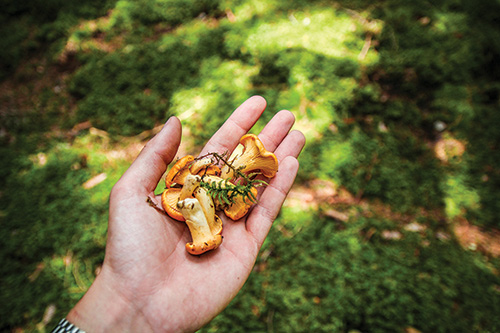
Mushroom foraging in Georgia is as old as the Caucasus Mountains themselves. Appearing in its folk culture and even used historically for medicinal purposes, mushrooms are most known as a frequent feature in Georgian dishes—cooked in a ketsi (clay pan) and topped with cheese and herbs or used as a meat substitute for dishes made during the predominantly Orthodox nation’s Lenten fasting season.
“For us, it was an important food source during tough times in Georgia,” says Nika Chachkhiani of the Georgian Mushroom Company. “You could just go into the forest or a field and collect some delicious food.” Today, Chachkhiani has turned his childhood pastime into a passion, searching for Parasol Mushrooms and Coral Fungus in Imereti, Racha, and Khaketi. It has led him and his business partner Misha Samkharadze to discover fungi all across the country.
Despite Georgia’s long legacy of heading into the forest for a hearty meal of wild mushrooms, the foraging scene is relatively underdeveloped. “It’s so unexplored,” Chachkhiani says. “That’s the fascinating part about Georgia. Some countries have mycologists [scientists who specialize in the study of fungi], and the foraging is pretty developed. Here it’s not.” As a result, Chachkhiani, who forages in places like Racha and the Sabadui forest with his business partner Misha Samkharadze, has come across some unexpected surprises. “We found some species that previously had not been found here in Georgia,” he says.
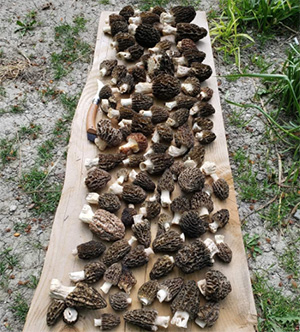
With exploration still ongoing in the country’s fungi frontier, it is hard to put an exact number to the mushroom species found in Georgia—though a 2022 guide produced by the Georgian conservation NGO CENN details more than 150 varieties in the country.
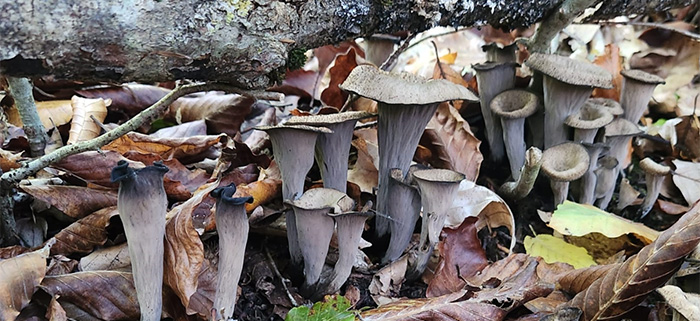
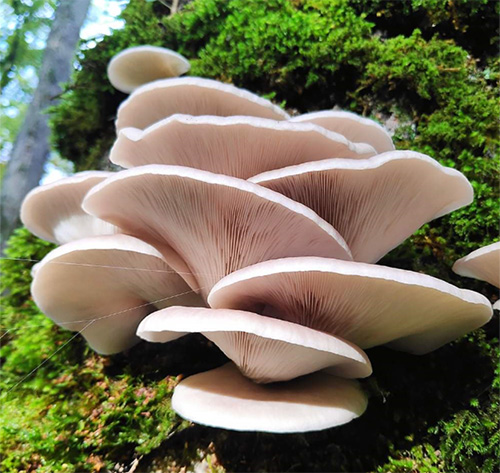
Venture into the forest, and you’ll come across patches of black trumpets, portly king bolete and summer cep mushrooms, and fairy-tale red and white-spotted fly agarics. You’ll find snowy oyster mushrooms blossoming out of patches of lichen, and mint-green tinged russula among the leaves.
To successfully forage, you must chase the rain. Mushrooms burst out of the surface after droughts, followed by spells of heavy rain, making it difficult to pre-plan a foraging adventure. Additionally, you need to be armed with the right gear: tick and mosquito spray, long-sleeved clothing, good boots, and a 4×4 vehicle to access remote areas. Most important of all, you need a baseline of knowledge and a mentor. Mushroom foraging is rewarding, but there are plenty of innocent-looking poisonous plants mingling with more benign ones. Going with a guide is key.
Chachkhiani suggests that beginners join Facebook groups like Mushrooms of Georgia to get to know the local community and find mentors who can share valuable knowledge. These groups can opine on the species and family of mushrooms but stop short of deeming them edible. It’s your responsibility to determine whether you trust the mushroom enough to fry it in a light butter sauce.
Learning the art of foraging
Chachkhiani understands that foraging for mushrooms can be intimidating at first, especially since the consequences of picking the wrong mushroom are high. “We (Misha and I) are planning to put together a course,” he says. “We’re envisioning a long-term course with a certificate for advanced mushroom foraging.”
Additionally, there are plans for an ongoing lecture series, in Georgian and English, and possible mushroom tours in the future. You can also taste one of the Georgian Mushroom Company’s signature products, truffle spirit, at Nekresi Estate, comprised of smooth alcohol and thinly sliced, locally sourced truffles. “It’s pure truffle,” Chachkhiani says. “We don’t put any additives in there; it’s just Georgian black truffle.”
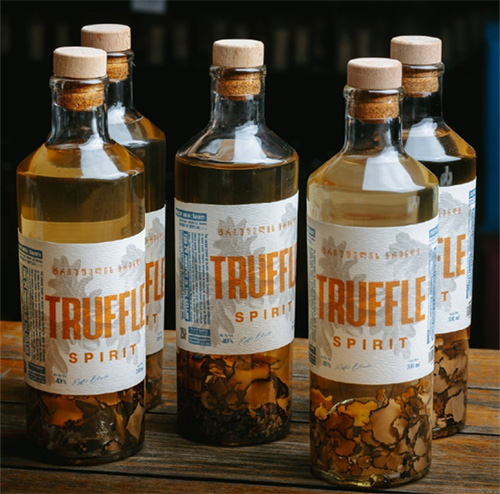
In addition to the Georgian black truffle, which is found predominantly in forests and hazelnut orchards of Khaheti and Racha, you’ll discover black trumpets, porcinis, and morels when you forage. Chanterelles are also common across Imereti and Racha, although they’re always in high demand and very weather dependent. As demand grows for artisan wild mushroom products, and people start to take more of an interest in foraging for their supper, it’s easy to see how Georgia’s fungi could take center stage in terms of tourist excursions and sought-after ingredients.