
Learning in America, leading in Georgia—the lasting impact of American education
As the United States celebrates its 250th anniversary, it is also an opportunity to recognize the lasting impact American education has had far beyond its borders. For decades, scholarships and exchange programs have helped shape a generation of Georgian professionals who returned home with new skills, broader perspectives, and lasting connections.
Among them are members of the American Chamber of Commerce in Georgia. While each journey is unique, they share a common legacy: the confidence to think differently, solve problems creatively, and help build modern Georgia.
Building legal foundations – and new ways of thinking
When Managing Partner of BLC Law Office and AmCham Board Member Ketti Kvartskhava arrived in North Carolina in 1998 as a recipient of the U.S. Department of State’s Muskie Program scholarship, studying in the United States still felt like an almost unattainable dream for many young Georgians.
At Wake Forest University School of Law, where she earned her LL.M. in 1999, she immersed herself in an entirely different legal tradition. Having been trained in a civil law system, she was fascinated by the American approach to precedent-based legal reasoning and its practical application to business.
“The idea was to understand how American law operates through precedents rather than extensive written codes,” she recalls. “Business law is quite universal, but understanding its underlying principles where they originated was invaluable.”
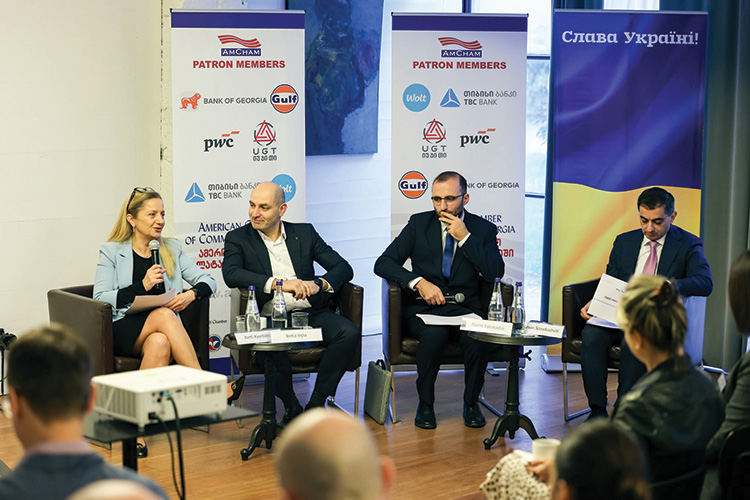
The timing proved particularly significant. Georgia was still building many of its post-independence institutions, including its tax legislation, much of which was developed with assistance from American experts. Returning home with a deeper understanding of tax law principles, Ketti was well positioned to contribute to discussions surrounding Georgia’s evolving legal framework.
Beyond technical expertise, however, American legal education fundamentally changed how she approached her profession. Rather than focusing primarily on theory, it emphasized practical problem-solving, critical thinking, and understanding a client’s business objectives.
One mentor continues to influence her today: tax law professor Joel S. Newman, whose favorite saying was simple but memorable: “Taxes are fun.”
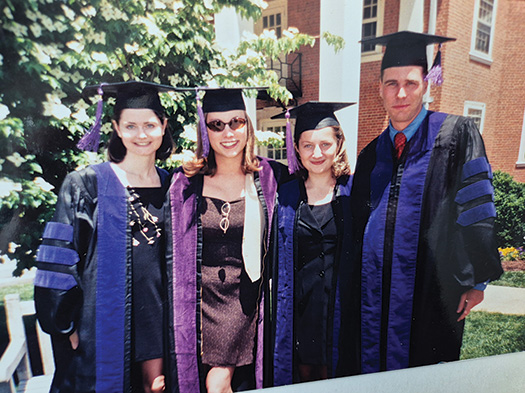
“It sounds unbelievable,” she laughs, “but after a short while of listening to him, I shared his view.” His enthusiasm demonstrated that even the most complex subjects become approachable when built on clear principles and logical thinking.
Another lasting lesson came outside the classroom. As an international student, Ketti was able to visit museums and cultural institutions that welcomed students free of charge. Years later, after returning as a successful legal professional, she revisited many of those same places—this time as someone in a position to give back herself.
“I realized that a society, which is grateful for its opportunities and is ready to share to create opportunities for others, is destined to succeed.”
Today, she believes educational exchange remains one of the most effective long-term investments a country can make. “If I were asked to name one standalone program capable of changing both professionals and countries,” she says, “it would be education.”
Learning independence half a world away
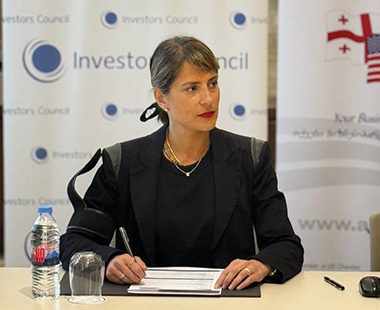
For AmCham Legal and Public Policy Director Lina Jikia, the United States became home for a year when she was just sixteen years old.
As a participant in the Future Leaders Exchange (FLEX) Program, she spent the 1998–1999 academic year living with a host family in Tampa, Florida, while completing her final year of high school. At a time before smartphones, social media, and video calls, moving halfway across the world required a remarkable degree of self-reliance.
“The greatest lesson was independence,” she says. “I had to adapt quickly, solve problems on my own, and navigate an entirely new environment.” That experience became the foundation of the leadership style she would later develop throughout her career.
Growing up in newly independent Georgia, earning a FLEX scholarship was considered one of the country’s most prestigious educational opportunities. More than an academic achievement, it offered exposure to a different culture, educational system, and way of thinking.
Returning to Georgia, Jikia found herself approaching opportunities with greater confidence and maturity. The experience also taught her to appreciate cultural diversity, understand the bigger picture behind individual tasks, and approach challenges from multiple perspectives—qualities she continues to rely on today.
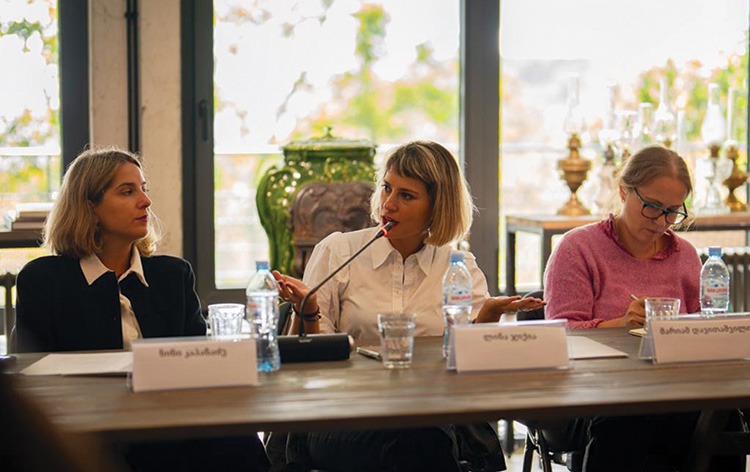
One particularly memorable experience came in an advanced English literature class, where her teacher proudly introduced her as the Georgian student who had already read authors such as J.D. Salinger, John Steinbeck, and Ernest Hemingway before arriving in America.
“It made me feel welcomed, valued, and respected for my efforts.”
That simple act of recognition left a lasting impression. Today, she strives to recreate that feeling within her own work by recognizing people’s strengths, encouraging initiative, and creating environments that empower people to contribute ideas.
Her year in the U.S. also strengthened her appreciation for diversity, merit-based achievement, and collaborative leadership. Although still a teenager, she saw herself as an informal ambassador for Georgia, introducing classmates and neighbors to a country that was largely unfamiliar to many Americans during the late 1990s. The experience continued to shape her academic and professional path. In 2010, she earned an LLM from King’s College London. Today, alongside her work with AmCham, she is a dual-qualified lawyer in Georgia and England and Wales, frequently serves as a legal consultant to the World Bank, and is a Member of the Court of the Georgian Dispute Resolution Center.
Looking ahead, Lina believes educational exchange remains one of the strongest investments Georgia can make in its future. “Those of us who had the opportunity to study in the U.S. gained direct exposure to the values, institutions, and practices that have contributed to its success,” she says. “Many of these lessons naturally became part of our own vision for Georgia’s future.”
Her advice to young Georgians is straightforward: seize every opportunity to study abroad. “The value lies not only in the education,” she says, “but also in living within a different culture, building relationships with people from diverse backgrounds, and learning to see the world through a broader lens.”
For both Ketti and Lina, their time in the United States did far more than strengthen their CVs. It shaped how they think, lead, and contribute to Georgia’s business community today—a reminder that education remains one of the most enduring investments in both individual success and the partnership between the U.S. and Georgia.