
TechHub and beyond: how UGT is shaping Georgia’s digital future through CSR
Georgian digital technology company UGT says corporate responsibility in the tech sector should go beyond one-off projects and instead serve as an investment in people, skills, and long-term competitiveness.
For UGT, corporate social responsibility is not a one-time gesture but part of how the company defines its role in Georgia’s technological landscape. The digital technology provider, founded in 1997 and initially active in the IT sector, has since expanded into fields such as electricity and building management, payment and cash processing, video monitoring, and solar energy. The company says its approach to CSR is rooted in long-term investment rather than occasional charitable activity.
“CSR for us means sharing knowledge, experience, and technological resources in areas where the company can have a real impact—education, innovation, strengthening the role of women in technology, and youth development,” says General Director of UGT Ermile Suladze.
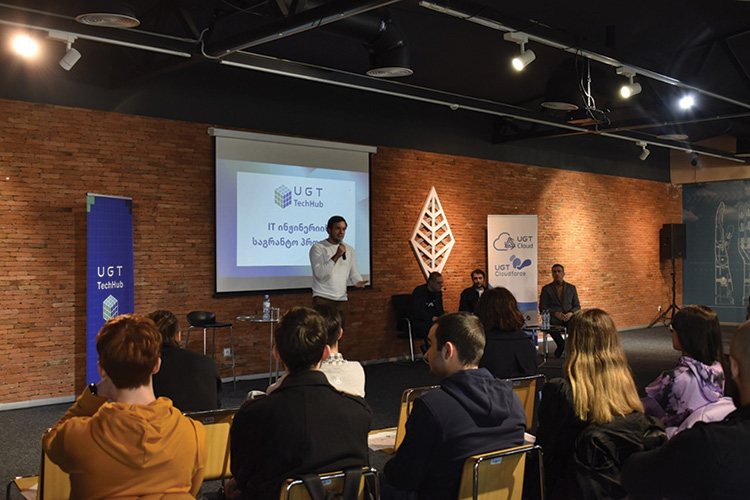
Suladze says UGT has been engaged in educational and technology-focused initiatives for many years, but its CSR activities intensified after education and innovation were formally identified as strategic priorities. The turning point was the creation of the UGT TechHub, which began several years ago as a long-term educational and practical training program. Through this platform, novice engineers learn the basics of IT engineering, programming, and other technological disciplines from certified instructors. Many participants later joined different teams within UGT.
UGT TechHub
To date, 75 young professionals have graduated from UGT’s training programs, including 20 women. After completing their studies, each graduate completed a paid internship at UGT. Today, 22 of these graduates are employed by UGT, while others have continued their careers in different companies in the sector.
This year, the company’s CSR priorities fall into three main areas:
- supporting technological education through the UGT TechHub program;
- environmental and energy-efficient initiatives linked to UGT Electric’s solar energy direction;
- and promoting gender balance by encouraging greater participation of women in technology.
The primary target groups are young people and students exploring future careers in tech.
The General Director of UGT describes this knowledge-sharing as the foundation of the company’s CSR strategy. “Our aim is for beneficiaries to create their own opportunities and implement ideas that will positively influence the business environment in the future,” he says.
He sees UGT TechHub as the company’s flagship effort—a space designed to help young people gain hands-on experience and understand how digital systems function in real business settings. The program combines lectures with project-based work, giving participants direct exposure to UGT specialists and modern technologies.
The results are already visible: several participants have been employed on technology projects, and many have chosen to pursue IT-related degrees—an outcome the company sees as a sign that the initiative is influencing career decisions among young people. “We measure success not only by the number of participants but by how much the program changes their attitude toward technology and improves their career prospects,” Suladze notes.
The company plans to broaden UGT TechHub’s scope in the coming years. The initially engineering-focused curriculum has already expanded to include cloud engineering, electrical engineering, and building management systems. The company aims to introduce new directions that respond both to market demand and the interests of young people. Partnerships with universities and educational organizations will also continue.
The General Director of UGT emphasizes that tech companies often misunderstand CSR as a one-off obligation rather than a strategic investment. For a sector built on innovation, he argues, long-term responsibility—developing skills, enabling new talent, and supporting knowledge exchange—is ultimately beneficial for society and business alike.