
From Tbilisi to Tashkent: Georgian firms chart a modern Silk Road
Uzbekistan has rapidly emerged as one of Central Asia’s most attractive destinations for foreign business expansion, particularly for companies from neighboring regions such as Georgia.
Since President Shavkat Mirziyoyev took office in 2016, Uzbekistan has pursued wide-ranging market-oriented reforms, including sector liberalization, privatization, improved transparency, streamlined business registration, and incentives for foreign direct investment (FDI). These efforts have translated into strong economic indicators. In 2025, Uzbekistan’s GDP reached approximately €133 billion (around $137–145 billion), with economic growth of 7.7%. Exports rose by 23% to roughly $33.4 billion, while FDI and total investment approached $43 billion, supported by free economic zones, tax incentives, and the gradual alignment of regulation with international standards.
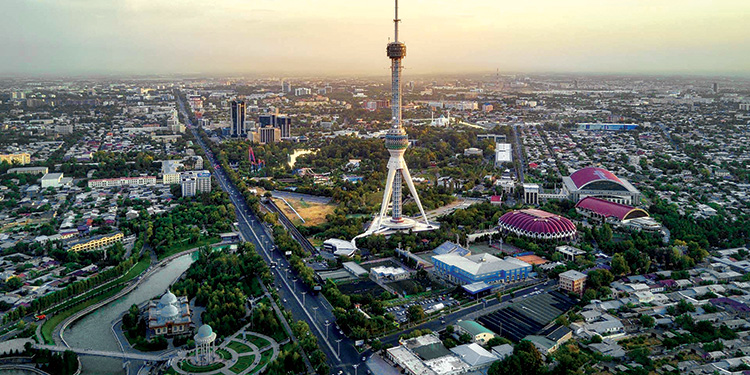
With a population exceeding 37 million—the largest in Central Asia—Uzbekistan offers a scale that smaller regional markets cannot provide alone. A young, increasingly digital population, strategic positioning along key trade corridors such as the Middle Corridor, and ongoing modernization across infrastructure, energy, IT, and finance make the country particularly attractive to foreign investors.
The government’s push for international partnerships, including initiatives such as its IT Park, which offers tax incentives and simplified visa regimes for technology firms, has drawn interest across a broad range of sectors. For Georgian companies, operating in a young, post-Soviet economy like Uzbekistan represents a logical next step in regional diversification. Cultural familiarity, shared business practices, and growing bilateral trade further reinforce this trajectory.
From interest to action: Georgian firms enter the market
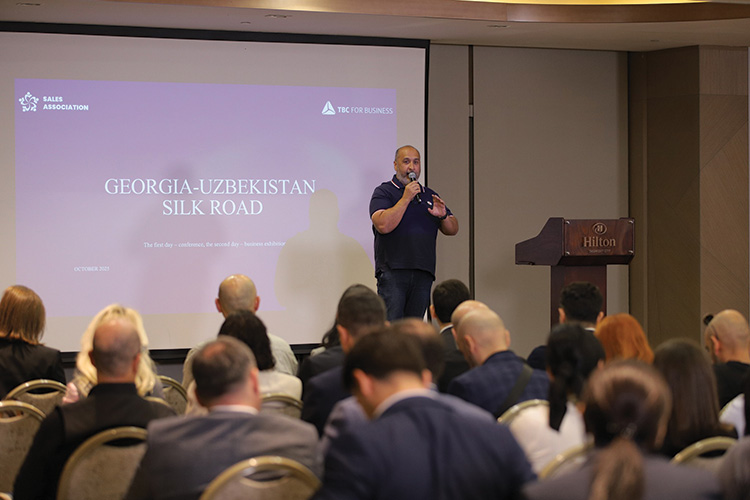
This momentum has already moved beyond theory. In the last year, Georgian companies have begun testing their ambitions on the ground—most visibly through a dedicated business forum and expo held in Tashkent by the Sales Association and TBC For Business. Designed specifically to connect Georgian firms with local partners and institutions, the scale and reception of the event sent a clear signal: expansion into Central Asia is no longer speculative.
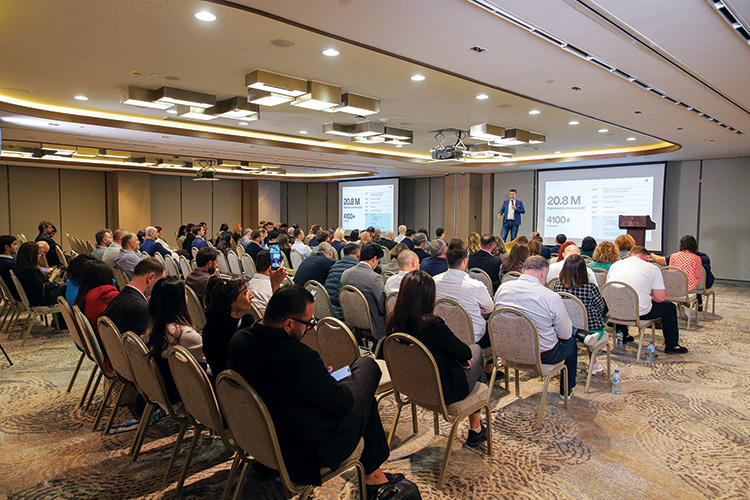
The Tashkent forum was supported by the Uzbek Investment Promotion Agency under the Ministry of Investment, Industry and Trade, as well as organizations such as AmCham Uzbekistan. The event opened with remarks from Georgia’s official representative in Uzbekistan and attracted approximately 4,000 attendees on the main exhibition day.
From Georgia, 46 companies participated across sectors including construction, healthcare, logistics, IT, consulting, tourism, and advertising, engaging directly with Uzbek counterparts through structured B2B meetings. The forum combined conference sessions with dedicated matchmaking spaces, offering participants both strategic insight and direct access to partners, regulators, and institutions. Uzbek representatives outlined the investment climate, company registration processes, and priority sectors, complemented by real-world experiences shared by Georgian firms already operating in the country.
TBC For Business supported the initiative as part of its broader mission to accompany companies through every stage of growth. Leader of TBC Bank’s Business Segment Management League Vepkhvia Lominashvili emphasized the importance of hands-on market entry support:
“This kind of platform helps companies take their first steps in a new market more confidently—by building partnerships, understanding local specifics, and accessing financial support when needed.”
Ketti Kvartskhava, AmCham Board Member and Managing Partner at BLC Law—one of the Georgian firms now operating in the market—describes Uzbekistan as offering both complexity and opportunity:
“Uzbekistan is a large market with corresponding challenges, but also significant potential due to its population and the state’s reform agenda. The country is actively adapting its legislation to international trade requirements. While geopolitical risks always exist, Uzbekistan remains relatively stable and focused on creating a favorable business environment.”
This balance of manageable risk, reform momentum, and access to a large consumer base has encouraged Georgian firms to expand their regional presence. Early entrants in banking and finance have helped pave the way for companies in legal services, construction, retail, and beyond.
Early movers and sectoral success stories
One of the most prominent examples is TBC Bank Group. The Georgian financial institution entered Uzbekistan in 2020 with TBC Uzbekistan, developing a digital-first banking ecosystem tailored to the local market. By 2025, the bank ranked among leading CIS financial institutions and reported strong contributions to group performance, driven by growth in both Georgia and Uzbekistan.
TBC’s expansion has extended beyond traditional banking. The launch of products such as the Salom Card and digital insurance services helped establish a broader ecosystem, while continued investment in payments, SME lending, and AI-driven solutions reinforced its market position. In August 2025, TBC acquired a majority stake in OLX Uzbekistan through a joint venture, integrating the popular classifieds platform into its digital services offering. The bank has also registered TBC Capital within Uzbekistan’s capital market sandbox and acquired a majority stake in BILLZ, a leading retail SaaS platform—signaling long-term ambitions in the country’s financial sector.
Within five years, TBC’s digital ecosystem reached nearly 20 million users. In just two years, it reported profits—a record time among global digital banks—and was ranked among the World’s Top Fintech Companies in the neobanking category by CNBC and Statista, becoming the first firm from Central Asia to achieve this distinction. Reflecting on this growth, CEO of TBC Uzbekistan Nika Kurdiani told BM.ge:
“Uzbekistan is one of the most exciting, high-growth markets for digital financial services globally, and we are proud to be leading the way. The rapid, profitable growth we continue to achieve in the country, while staying committed to innovation, demonstrates both the strength of the market and its opportunities.”
Alongside finance, professional services have followed. BLC Law opened its first international office in Tashkent in 2025—its first overseas branch under its own brand. Established in the early 2000s, the firm specializes in energy, finance, corporate law, tax, infrastructure, and international arbitration.
Explaining the decision, AmCham Board Member and BLC Managing Partner Ketti Kvartskhava points to strong strategic alignment:
“We understand Uzbek culture, the state structure, and the legal system quite well. Uzbekistan is the Central Asian country with the most clearly articulated reform agenda and a strong interest in attracting foreign investment. We believe our experience can support both international investors and Georgian businesses entering the market.”
The Tashkent office brings together local Uzbek lawyers and teams from Tbilisi, with staff exchanges supporting knowledge transfer. BLC advises Uzbek companies pursuing international expansion as well as foreign investors entering Uzbekistan, drawing on Georgia’s own experience with legislative reform and market liberalization.
“Uzbekistan has serious reforms planned, and we are ready to participate in them,” Kvartskhava adds.
In construction, Element Construction represents another notable Georgian entrant. Founded in 2007 and part of Element Holding, the company specializes in industrial, hydrotechnical, and civil construction. In 2024, it entered the Uzbek market as part of its regional growth strategy. As Director Davit Cholokava explains:
“From the beginning, Element Construction positioned itself as a company aligned with international standards. Our experience with large-scale industrial and civil projects laid the groundwork for regional expansion, and Uzbekistan became our first step beyond Georgia.”
Uzbekistan’s demand for infrastructure development, manufacturing facilities, logistics hubs, and modern urban spaces closely aligns with the firm’s expertise. Rather than entering independently, Element Construction adopted a partnership model, operating through a joint venture with Beltera Holding—an Uzbek-British company—under the T-SOD project structure commonly used in Uzbekistan to manage large-scale construction and development projects.
“The local partner brings deep knowledge of regulations, business culture, and operational realities, while we contribute international experience and project management expertise,” Cholokava notes. “This significantly reduces entry risks and supports sustainable growth.”
The partnership has already enabled the delivery of industrial, commercial, and residential projects, including a large-scale multi-apartment residential complex, positioning the company for further regional expansion.
Taken together, these success stories highlight a broader shift in Georgian business strategy toward Uzbekistan—one defined by careful market analysis, strong local partnerships, and the targeted application of sector-specific expertise.
Facilitating market entry: AmCham Georgia’s role
In an effort build on member interest as well as to facilitate and support new networks, AmCham Georgia has been increasingly engaging with other AmChams across the Central Asia region. Over the last two years, AmCham Georgia has been a leading participant in AmCham Eurasia Economic Conferences that have brought together AmCham Presidents, Executives, and members from Greece to Kyrgyzstan.
AmCham Executive Director Dr. George Welton also recently attended the B5+1 Conference in Bishkek. The forum, which has existed since 2024, brings together private sector players from Central Asia and facilitates their contacts with U.S. companies. It is currently facilitated by the U.S. Government’s Center for International Private Enterprise (CIPE) to encourage greater engagement across Central Asia and stronger private sector connections between the regions and the U.S.
Across several sectors, Georgian firms are moving beyond exploration to establish a durable presence, capitalizing on Uzbekistan’s reform-driven environment, expanding consumer base, and infrastructure needs while helping to shape an increasingly connected, cross-border business ecosystem along a modern Silk Road. As Dr. Welton explains, “Connecting Georgia with Central Asia is clearly a priority of our members and the U.S. Government as they both see huge growth opportunities in the region and a strong demand for outside expertise and financing. For example, while Georgia is very much smaller than Uzbekistan, the professional space in Georgia is unparalleled in the region, particularly in relation to financial services, online service delivery, transport and logistics, retail, and tourism. The combination of Georgian and international expertise, with a Western-oriented and developing business environment is a recipe for great success.”