
Georgia expands early warning systems amid rising climate risks
Rising temperatures and retreating glaciers are increasing the frequency and severity of natural hazards across Georgia. In response, the country is investing in early warning systems to strengthen disaster preparedness and protect vulnerable communities.
Climate change is dangerous. Georgia tragically discovered that in the Shovi disaster of 2023, when thawing permafrost and a melting glacier devastatingly released hundreds of thousands of tons of rock and mud to crash down the hillside and engulf a village. A Swiss-led review conducted by engineering company GEOTEST AG suggested that while the exact timing of such a rare event is difficult, a properly implemented early warning system could have provided the 8–10 minutes needed for people to reach higher ground. As of early 2026, just such a system is actively rolling out “last-mile” communication tools and finishing the installation of its expanded monitoring network.
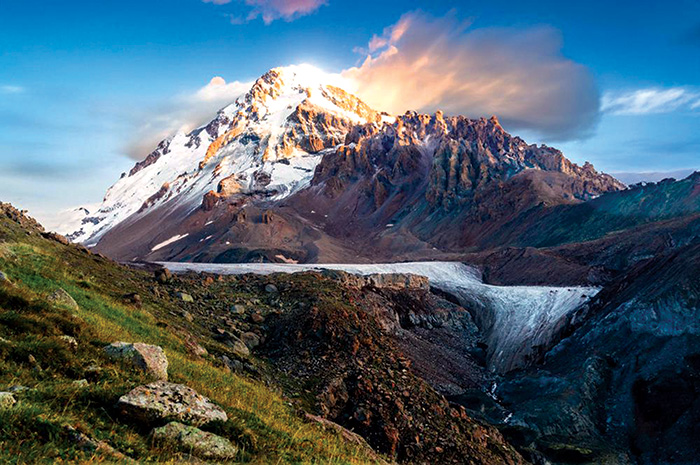
The South Caucasus is home to some of the world’s fastest melting glaciers, with rising temperatures pushing them toward a tipping point. The United Nations Environment Program (UNEP) states that in Georgia, glaciers have shrunk by around 24% since 2000, and that forecasted weather conditions will accelerate melt in 2026.
Seasonal snow cover duration in the region has shortened by 11 days, and average snow depth has decreased by three centimeters since 2000, say experts who have been working with the UN Development Program. Research indicates that the rate of glacier area reduction in the Greater Caucasus between 2000 and 2020 was four times higher than it was between 1911 and 1960. Armenia’s glaciers have vanished, and in Azerbaijan, they have shrunk by 77% between 2000 and 2020. This is a severe threat to the region’s entire water cycle, and ahead lie notable water problems, including for agriculture and power generation. But for now, it is risks from avalanches and landslides that dominate the headlines.
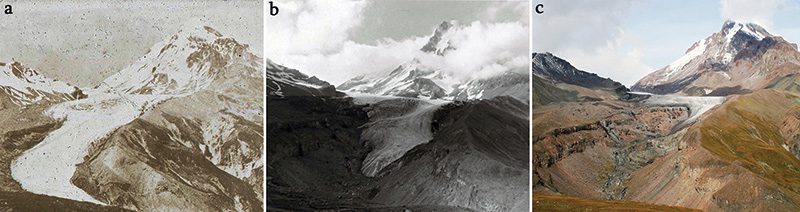
This melt is increasing the risk of natural hazards, according to a recently released policy brief from the UNEP titled Melting Heritage: Adapting to a Changing Snow and Ice Cover in the South Caucasus. It calls for greater monitoring and data sharing, and for snow and ice loss to be built into climate adaptation plans.
Swiss geologist and natural hazard expert Daniel Tobler, who is also the CEO of GEOTEST, has been a key figure in assessing and managing risks related to glacial valleys and climate change. Working as part of a UNDP Georgia climate program, he collaborated with Georgia’s National Environmental Agency and Emergency Management Service to review and implement protocols for multi-hazard early warning systems.
From research to response
The work by Daniel Tobler and GEOTEST AG represents a shift from academic monitoring to integrated security and early warning. While Georgians have studied their glaciers for over 150 years, the automated, real-time warning networks being built today are the first of their kind in the country’s history.
Presenting GEOTEST’s review earlier this year, Daniel Tobler said the government could now focus on “mitigating existing dangers, preventing new ones, and gradually reducing risks to acceptable levels.”
Covered in the new warning system are nearly all disaster risk zones within Georgia’s major river basins. The program’s infrastructure combines high-tech monitoring with physical flood defences to protect over 1.7 million people. The system is designed to monitor and mitigate seven primary hazards: floods, landslides, mudflows, snow avalanches, strong winds, hail, and droughts. A coordination team is being established within the government administration, bringing together all relevant agencies.
The program has reached several critical milestones in modernizing Georgia’s disaster response. These are:
Modernized Monitoring Network: 79 new hydrometeorological stations have been installed across the country, with an additional 77 stations currently being deployed. New agrometeorological and geological monitoring stations have been integrated to track a wider range of hazards.
Forecasting & Risk Assessment: Georgia has officially joined the European Centre for Medium-Range Weather Forecasts (ECMWF), enhancing national forecasting accuracy. A Multi-Hazard Disaster Risk Information System (MHDRIS) is now operational at the Emergency Management Service (EMS), containing hazard and risk data for all 11 major river basins.
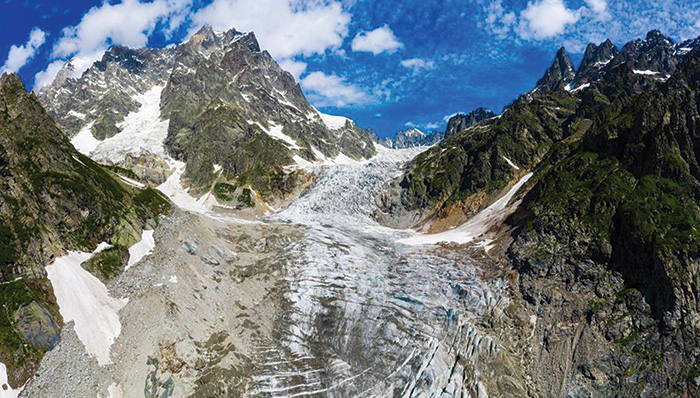
Community-Level Readiness: Emergency Management Plans have been developed for 11 municipalities, with six (including Gori and Telavi) already officially adopted by local authorities. Flood-protective infrastructure has been completed in seven high-risk locations, with work ongoing at eight more sites.
Digital Solutions: Development of the SmartMet and SmartAlert mobile applications is nearing completion, designed to deliver direct early warnings to the public’s smartphones. This initiative remains the cornerstone of Georgia’s climate resilience strategy. Named the Multi-Hazard Early Warning System (MHEWS), it and related risk information systems in Georgia are part of a broader $70–74 million initiative, funded primarily by the Green Climate Fund, with additional support from the Georgian government, Switzerland, and Sweden. The Green Climate Fund is the world’s largest dedicated multilateral climate fund and is administered by the UN. It is specifically designed to support developing countries in their transition to low-emission, climate-resilient development.
These efforts are identifying the most vulnerable communities per hazard maps and the socio-economic vulnerability assessment. The program has identified the 100 most vulnerable communities in both Western and Eastern Georgia. So far, planning has been carried out in 45 of the most vulnerable communities in Western Georgia, and this year plans for Eastern Georgia will be completed.
One of the most important aspects of Georgia’s new system is the way communities are being brought in to become the center of the work, with risk management programs helping people take action – planting trees, clearing riverbeds and building small protective structures. Awareness campaigns and training have reached thousands, including young people, in climate-focused programs. Scholarships and education opportunities are helping students pursue studies in environmental sciences and sustainable development. Well over 100 students have received Green Scholarships.
Rising risks in a warming climate
The picture described in the Melting Heritage policy brief is an alarming one. “Ongoing glacier retreat will furthermore intensify mountain hazards, including floods, landslides, rockfall and ice avalanches, with the 2023 fatal avalanche and debris flow in Shovi, Georgia, highlighted as an example of the region’s vulnerability,“ it states. These hazards may become more frequent once glacier loss reaches a tipping point, known as ‘peak water’ – the glaciers’ contribution to river discharge will decline, leading to increased water scarcity at local, national and regional levels, the policy brief adds.
However, free and open access to data on snow and ice loss is currently lacking across the region, and no regional permafrost or glacial lake monitoring is currently in place, the brief finds. While countries have climate policies in place, these furthermore need to take snow and ice loss into account, it underlines.
Climate change is already affecting agricultural productivity and food security in the Caucasus. Existing water availability challenges – stemming from inefficient use, unequal distribution, and seasonal fluctuations – are expected to worsen as ice and snow volumes shrink. While Armenia and Georgia rely heavily on groundwater reserves for drinking water, Azerbaijan depends largely on the Kura River and mountain watersheds.
As glaciers shrink, the number of lakes around them is increasing, raising the risk of hazardous events, including glacier lake outbursts, floods, and debris flows. Before peak water is reached, excess run-off will increase flood risk during hot years, states the policy paper. Glacier thinning and permafrost degradation are also destabilizing high-elevation rock faces, increasing the risks of landslides, glacial lake outburst floods, snow avalanches and slope collapse.
“These hazards are expected to become more frequent as ice and permafrost loss continues, threatening both human life and settlements, as well as critical infrastructure,” it adds.
Reduced water availability directly affects the energy sector, as hydropower is a critical source of electricity in the region. The 1,300‑MW Enguri hydropower plant, which serves as an important part of the country’s electricity generation system, is largely dependent on glacier run-off. According to a 2018 report, the glacier area in the Enguri basin had decreased by 23% compared to the 1970 glacier inventory, according to the Georgian Ministry of Environment.
Despite major strides, critical areas for improved monitoring of the cryosphere—places where water is frozen, including ice sheets, glaciers, sea ice, permafrost, and snow-covered land— remain in 2026, states the UNEP. Experts note a persistent lack of free and open access to regional snow and ice loss data. Further, there is currently no regional-scale monitoring for permafrost or glacial lakes, which are significant triggers for sudden debris flows like the 2023 Shovi disaster. Despite recent investments, there are still critical funding gaps in disaster risk management for flood-related sectors, which often rely on inconsistent international grants.
As of early 2026, Georgia’s cryosphere and multi-hazard early warning systems (EWS) have reached a historically high level of sophistication but are not yet fully complete. Despite better systems, the rapid, accelerating cryosphere changes (melting ice, permafrost thaw) pose ongoing, unprecedented risks that require continuous adaptation. The 2026–2030 UN Sustainable Development Cooperation Framework highlights that strengthening and expanding these tools is an ongoing priority for the next four years.
While Georgia is considered by the experts to have made substantial, rapid progress in reducing climate risks through technical upgrades and international cooperation, its systems are part of an evolving seven-year project designed for continuous improvement.