
Bringing real magic to Georgia — what Temur Ugulava leaves behind
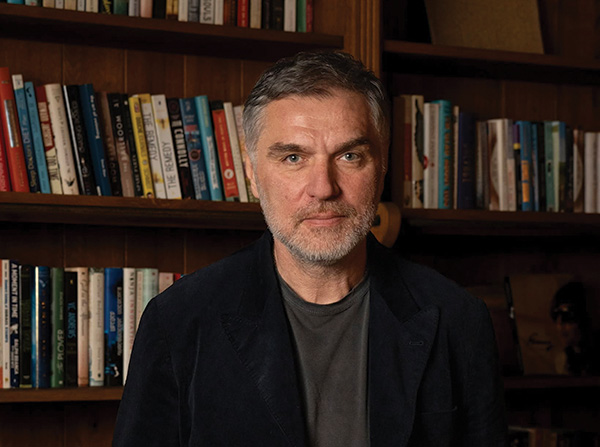
We usually relegate magic and wizardry to childhood stories, left behind as we grow up. And yet, sometimes magicians walk among us, though we can only recognize them for who they are when they are gone. This is a conclusion one can come to after reading the tributes that have poured in after Temur Ugulava’s death on June 22, 2026.
Ugulava, born in 1970 in Khoni, transformed Georgia. He conjured enchanting spaces, assembled fabulous teams, and gave Georgia a contemporary magnetic glamour. He also offered generous help to dozens of people, usually without much ado.
Ugulava is best known for setting up Rooms Kazbegi, Rooms Tbilisi, Stamba, Fabrika Tbilisi, and, most recently, Radio City. These are chic and compelling locations, but they are also far more. “He gave all of these places a soul,” is how one friend described it. Where others would tear down to build exchangeable properties, Ugulava cast his spells by attending to what was already there, then turning it towards a possible future.
In Georgia, excitement had typically been reserved for the arrival of an established foreign brand. Ugulava reversed the direction of prestige. His spaces were radically local and not only Georgian, but specific to the context they were created in. Even the names—Stamba, the printing house; Fabrika, the factory—retain their memory while also hinting at imprinting an optimistic transformation and producing new possibilities.
The Adjara Group, Ugulava’s corporate entity, summed up its mission as “channeling Georgian culture by creating brands that blend innovation, tradition, unique experiences, and authentic connections.” In this, he drew on multiple influences. Arguably, some of the vibe was developed by Guga Kotetishvili in the original PurPur restaurant in the Old Town. In Ugulava’s own designs, beginning with Rooms Kazbegi (after an apprenticeship in hospitality with the Holiday Inn in Saburtalo), renowned Georgian artists and designers contributed, though no single figure dominated. Like Georgia’s culture, these spaces resonated through their fusion of multiple and sometimes contradictory layers.
A contemporary fairy tale
Previously, Georgia’s hosts had managed to put together moments of folkloric immersion. Only through Ugulava, however, can you step into a world that, at its best, feels like a fairy tale: with the majestic view of Mount Kazbegi catching the first rays of sun hours before they reach the valley; amidst the hullabaloo in the Lolita restaurant opposite Rooms; through the cinematic vista across the Stamba restaurant; or among the riot of partygoers in the Fabrika Tbilisi courtyard on a Friday night.
The impact reached further than the sum of moments that might do well on Instagram. Rather, the spaces created opportunities that were unimaginable before, as the ZEG Storytelling Festival illustrates. ZEG, which began at Fabrika in 2019 and maintains an ongoing relationship with Rooms Tbilisi and Stamba, has drawn storytellers—journalists, activists, creators, Hollywood stars, Nobel laureates—to Georgia who otherwise might never have come and beguiled many of them to keep coming back. The festival held its sixth edition just the weekend before Ugulava’s passing and is only one of many all-in events connecting culture and community that have come to revolve around his locations.
As the journalist Helena Bedwell noted, Ugulava’s locations had a radiating impact. The entire town of Kazbegi, previously derelict, became an upbeat destination. Within months of its launch, the streets around Fabrika Tbilisi, on the left bank of the river, developed a new flair and the neighborhood participated in a micro-miracle. Real estate prices rose, but more importantly, the mood lifted, as if in an act of urban levitation.
On an unending quest
None of this was as easy as it might have looked. The magic wand did not always work. Of three helicopters that the Adjara Group acquired in the late 2010s, one caught fire during a stop in snowy mountains, while another crashed with its crew. The almond plantation in Kakheti, covering thousands of hectares, struggled in the austere climate of the David Gareja monastery. The Udabno project of regenerative agriculture is still refining itself. Rooms Bakuriani was eventually sold.
The challenges show that Ugulava, as in legend, was on an unending quest—for people, places, designs, and recipes. A friend tells the story of how Ugulava tasted an outstanding lobio in a peripheral cafe, struck up a conversation, and recruited this man to set up Keto and Kote, another of Tbilisi’s great draws. The expansive impact has led the philosopher Levan Ghambashidze to describe Ugulava as a Medici of Georgia—a fitting description for this catalyst of a stunning renaissance.
One hallmark of Ugulava’s stature is that he spawned his own myths. One story claims that in his early business days in Saburtalo, he gained wide respect by sidelining a vicious associate. According to another, when people were trying to shake him down, he was the one rare individual that managed to get them sacked. These stories tell the truth that Ugulava was understood to be an epic figure, whatever the merits of the specific attribution.
Alongside his own projects, it has now become more public how much Ugulava did for individuals and small groups, often donating (as tribute after tribute repeats) the exact amount of money that was needed to help a person or an artistic project. He was a sponsor of a children’s hospice. Some of this patronage you barely noticed if you did not pay attention. For years, his trusted lieutenants, Valeri Chekheria and Levan Berulava, would be at charity auctions, enthusiastically bidding up attractive pieces, contributing to good causes, and, presumably, furnishing the interiors they kept enriching.
All real wizardry, of course, has a dark side. Ugulava’s success was built on wealth earned through Adjarabet, with people gambling away their money to the point of addiction. The source of vast possibility had its massive cost in many lives, too. (He sold his stake in Adjarabet in 2019.) Some commentators have called for a broader reckoning with “Georgia’s unresolved relationship with property, memory, transition, and moral judgment,” as Giorgi Meladze put it in OC Media. Yet what Ugulava turned his riches into was as close to redemption as one can come to on our earth. He provided a model of extraordinary transubstantiation.
Ugulava’s alchemy, emerging from a context in which entrepreneurship was still finding its footing, managed to dazzle guests from countries with many decades of free enterprise behind them. He made inspired decisions that ran against the usual logic. Normally, status is associated with exclusivity. And yet a part of Ugulava’s magic was the accessibility of his special places, not only for those with money. Anyone can walk into Stamba and find a nook. Some of the most penniless creatures in the world—Tbilisi dogs without an owner—wander into Stamba’s lobby and climb onto its lush leather sofa for a nap.
A fabulous circle
All of this was carried by another of Ugulava’s gifts, his ability to summon a fabulous crew. Chekheria and Berulava are the most well-known of his collaborators, but there were hundreds to whom he offered a kind of home to work. Some could not even have dreamed of what they would become. The possibilities had simply not existed before. When you are told that diversity is strength, it mostly is offered as a cliché. Yet in his teams you could see this promise being lived out.
The culture he built rested on an old code: you respected others and were respected in turn. The occasional presence of Ugulava’s old friends from Saburtalo, men whose muscles barely fit into their T-shirts, some of them recently carrying his coffin at the funeral, made clear that his venues were to be left well alone. In this, too, Ugulava reconciled contradictions.
Like many others, I often saw Ugulava at a back table in Stamba, sitting with his team. In most establishments, you notice a stiffening when an owner is present. By contrast, the staff at Stamba seemed to enjoy doing their job around him: the Adjara Group ran on passion. One of their managers mentioned that they would ask applicants what they were enthusiastic about. A genuine spark was the one quality she looked for.
The crew unlocked a wondrous transformation. In their forcefield (the culinary school at the Free University helped), serving guests well in Tbilisi has now become a performance of understated pride. Previously, for many Georgians, waiting tables had carried little respect.
If one of the prized skills of wizardry is to make oneself invisible, Ugulava only partially succeeded. He was unassuming in person to the point of being gruff. Through his actions, however, Ugulava did stand out, particularly when compared to many of his wealthy peers, most of whom have at best been inconsistent in turning their riches into genuine uplift. And yet, it has only now become possible to take a fuller measure of him in all his dimensions.
With magic as the metaphor, the contested phrase “post-Soviet” can name the curse of cynicism, the impulse to believe that your own efforts will not be rewarded and that you must invalidate the hope of others, too. In many ways, that curse is still upon us. Against this, Ugulava—perhaps more than anyone in these wider lands—showed that a different future is possible. In Georgia, he pioneered a renewal of faith in what this country and its good people can make.
He showed, at least to me, something smaller and stranger: that the terms of a magical world I thought I had left behind with childhood can, in rare cases, capture the true meaning of our reality better than any spreadsheet or TripAdvisor review ever will.
The magician is gone. The magic, if we choose to guard it, may stay.
Hans Gutbrod is a Professor at Ilia State University. He also writes at http://hansgutbrod.substack.com/