
From Aludi to IPA: how Georgia is crafting a new beer story
Georgia’s rich flora, cultural memory, and a strong dash of local enterprise are combining to produce a very 21st century product. This is craft beer, including wild ones that reference ancient mountain rituals, but which are now being produced all over the country.
Though small in scale, craft brewers are already gaining attention in countries that are target markets for Georgian tourism, both in Asia and the West. Vogue Travel, The Times and international searcher Restaurant Guru have all lauded Georgia’s craft bar scene as a destination for gourmet tourists and, international beer discovery apps Untappd.com and finding.beer.com regularly rate Georgian craft beer highly.
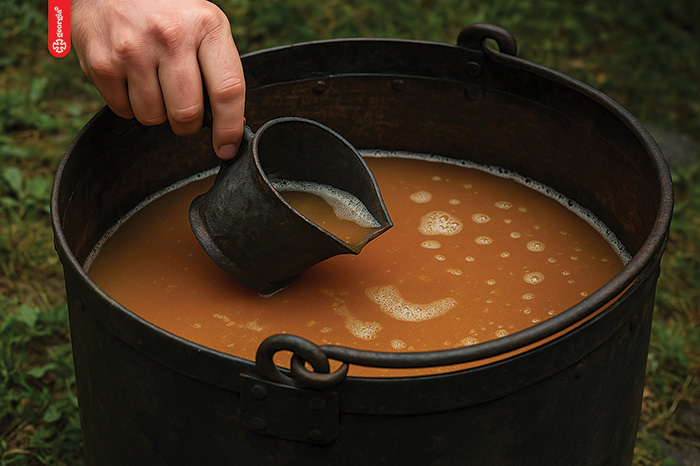
Craft beer brewed in Georgia, especially the wild brew, has all the characteristics that appeal to many modern drinkers. Often it has relatively low alcohol content and is quite exotic. It is packed with healthy additives (such as wild pomegranates, sea buckthorn, quince, cherries, apples, plums, and wild herbs like thyme, tarragon, mint, and linden) and is made with minimum intervention. As with natural wine, craft beer has given rise to a global movement that has generated significant publicity by promoting shared social and philosophical values, a rejection of industrialized beverage production, and support for small, independent producers. Another strong marketing point is that Georgian craft beer can tell as good a story as the best of them.
For one, long before beer became trendy in Tbilisi taprooms, it was sacred in the Caucasus highlands. In Georgia’s remote mountain regions—Khevsureti, Tusheti, Pshavi, and beyond—locals have, perhaps for thousands of years, produced aludi, a traditional beer made with wild hops and herbs, drunk as part of religious mountain rituals. Now the government is in the process of adding aludi to Georgia’s presence on the UNESCO Intangible Cultural Heritage List. Then there is a very nice marketing angle, appealing to beer geeks in both Europe and the U.S.: since Georgia’s contemporary craft beer comes from a historic wine country, some brewers borrow from natural wine processes, and use a qvevri for fermentation.
Small industry with growing ambitions
Well known though the Georgian craft beers may be to international beer aficionados, however, their visibility is currently disproportionate to their overseas sales. They are just at the beginning of establishing export networks and right now, the most likely place to find them in Europe or the U.S. is at festivals, specialty craft beer bars, and Georgian restaurants.
Even in Georgia, many beers take some searching out. Craft beer remains a small segment of Georgia’s beer market, with most figures based on industry estimates, as up-to-date official statistics are unavailable. The big beer picture is dominated by four players, who together are thought to have around 85% of the market, the rest being taken by imports and the large number of small companies. By far the clear market leader is Turkey’s Efes (producer in Georgia of such brands as Natakhtari, Karva, Kasris, Staropramen, and Löwenbräu), which described a 2025 total beer market figure of around 140 million liters (worth approximately 330 million GEL) and annual growth at around 2%, according to i.business.ge. The other three major players are the Georgian Beer Company (Zedazeni), which is part of major Georgian supermarket group Daily; Global Beer Georgia (Kazbegi), 80% owned by giant Dutch group Royal Swinkels; and Argo, which is 40% owned by Royal Swinkels.

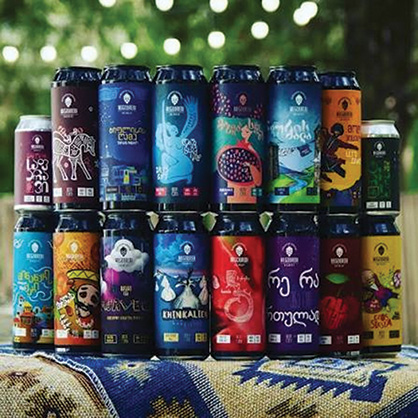
Then come the small craft beer companies with a wide array of products, led by Megobrebi, Shavi Lomi (now owned by Royal Swinkels), and Number 8, each producing perhaps hundreds of thousands of liters. Bayo and Lost Ridge are regarded as coming next, thought to produce in the tens of thousands of liters, followed by a long tail of smaller ones, such as Seahorse, Underground, Naturale, Bevri, Alkhanaidze, Chito, Svia, and Agara. Many of the smallest are in fact brewpubs—brewing beer on-site and making most of their sales directly to customers through their own restaurant, bar, or taproom.
The burgeoning craft beer scene is concentrated primarily in Tbilisi. Outside Tbilisi, the craft beer movement is smaller but growing steadily, primarily in Batumi, Kutaisi, and rural Kakheti. But beers made in situ can also be found at farm guest houses in most of the regions, reviving ancient recipes and traditions aiming to appeal to gastro-tourists looking for the unusual.
From ancient tradition to modern revival
Craft beers achieved a commercial presence in Georgia rather late compared to Europe and the U.S., where beer geeks rebelled against the monoculture of mass-produced beer production and bland lagers in the 1960s and 1970s. In the UK, the Campaign for Real Ale (CAMRA), founded in 1971, promoted traditionally brewed cask ales made with whole hops and natural carbonation. The organization’s advocacy helped fuel the growth of regional microbreweries. In the U.S., Jimmy Carter’s Homebrew Legislation of 1978 allowed “garage” beer production and spawned the craft beer industry. In Europe, countries like Belgium, Germany, and the Czech Republic did not share the “craft” breakout at the time, due largely to the fact that they never lost their traditional regional beer brewing.
The Soviet period brought significant changes to Georgian beer culture, as centralized production and standardized recipes replaced traditional brewing practices. State-controlled breweries focused on producing consistent, mass-market lagers that could be distributed throughout the Soviet Union, leading to a temporary decline in the diversity and artisanal quality that had characterized Georgian village beer production. However, Soviet-era breweries invested in modern equipment and quality control measures, creating a foundation of technical knowledge that contemporary brewers have built upon.
Despite the challenges of this era, many village brewing families managed to continue producing beer traditionally in small quantities for local consumption, preserving ancient recipes and techniques that might otherwise have been lost. These underground brewing traditions served as a bridge between Georgia’s ancient beer heritage and its modern renaissance.

Meet Georgia’s craft beer pioneers
The collapse of the Soviet Union in 1991 marked the beginning of a new chapter in Georgian beer culture. As the country regained its independence, a new generation of brewers began exploring ways to revive traditional brewing methods while incorporating modern techniques and influences. According to local industry experts, the modern leaders in terms of international visibility are Megobrebi, Lost Ridge, Shavi Lomi, Bayo, and Number 8.
Few of the entrepreneurs who entered the craft beer trade have a brewing background. Megobrebi’s founders, for example, are an international group of pioneering entrepreneurs and beer enthusiasts—they include Yaroslav Nigal, Vyacheslav Pyanzov, and Andrew Zhidkov, and while details about them are sparse, the group describes itself as having backgrounds in Georgia, Singapore, Ukraine and the U.S. Their production is primarily sold locally in Tbilisi bars (particularly their own Tsota Tsota taproom in Sololaki) but can be found in Europe via specialty importers. Their niche is experimental sours and wine-beer hybrids.
Bayo founder Giorgi Marusashvili, who has a background in food processing, spoke in interviews last year about the company’s plans to export its products for the first time, with Finland and Lithuania as its initial target markets. He told BM.ge that the company had recently expanded production significantly, tripling output over the past three months—which has attracted the attention of foreign importers. Bayo’s specialty is its hop-forward IPAs.
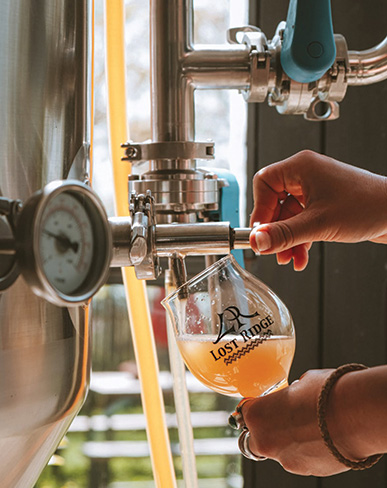
Lost Ridge/Svia brewery has emerged from the heart of the Kakheti travel and hospitality sector, with co-founders including the well-known natural wine and hospitality entrepreneur John Wurdeman (Pheasants Tears). The site, at Qedeli near Sighnaghi, incorporates a ranch, inn, restaurant, and the Svia brewery. The range is deeply seasonal, using Kakheti and Tusheti hand-foraged botanicals and fruits. Exports primarily target premium bottle shops and niche gastro bars in the U.S. and Europe.
Gotsa Artisan Brew is an unfiltered farmhouse ale-saison crafted by Gotsa Family Wines. It is brewed using natural mountain yeast, Kiketian spring water, and traditional Georgian barley (ovrimi). The brewery also produces unique grape ales—Qvrimi Grape Ale—which it brews in a collaboration with the Black Lamb Brewery in qvevris with spontaneous fermentation. Grape varieties include Chinuri, Tsitska, and Tsolikouri.
In alcohol terms, Georgia’s craft beers offer a diverse choice, generally ranging from 4.5% to 7% ABV (alcohol by volume), fitting standard global profiles. Popular styles like pale ales, lagers, and IPAs stick to these averages, while specialty brews (e.g., stouts, sour ales) or experimental meads can occasionally reach 8% to 10% ABV. The Georgian craft beer landscape—anchored by notable microbreweries in Tbilisi like Megobrebi, Shavi Lomi and Number 8—focuses on drinkability rather than excessively high alcohol content. A breakdown of the typical ABV ranges by style is:
– Lagers & pilsners: 4.5% to 5% ABV, providing light, crisp options.
– Pale ales & IPAs: 5% to 6.5% ABV, balancing strong hop aromas with a moderate punch.
– Stouts & porters: 5% to 7% ABV, offering heavier roasted flavors.
– Experimental/sour ales: ranges vary greatly, often falling between 4.5% to 7% ABV, though some fruit-heavy sours or mead hybrids can push higher depending on fermentation.
Where to drink craft beer in Tbilisi
The Tbilisi scene includes:
– Tsota Tsota Craft Beer Pub: located in Sololaki at 7/20 Geronti Kikodze St, Megobrebi’s official taproom.
– Process Craft Beer Bar: a cozy, hole-in-the-wall spot on 19 Merab Kostava that pours house brews alongside fridges stocked with bottles from Georgian breweries like NaturAle and Underground.
– Hopa Taproom: situated on Atoneli St in Orbeliani Square, this is a dedicated showcase for local breweries like NaturAle and Naked Baby.
– Sma Craft Beer Bar: located at 48 Lado Asatiani St, this music-forward, retro bar features exclusive homebrews, rotating Georgian craft beers on tap, and great burgers.
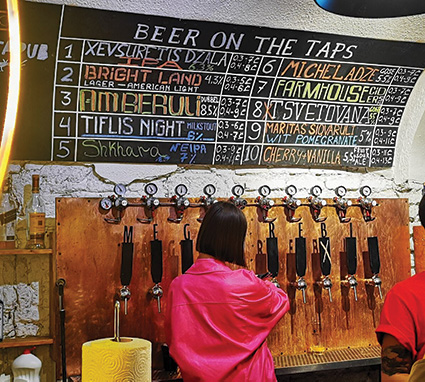
– Seven Roads: a large underground venue located at 4 Irakli Abashidze St that serves up to 15 taps of Georgian craft beers and over 100 bottled varieties.
– Number 8 Craft Beer Club: a bar located at 22 Irakli Abashidze St that pours fresh brews from their own brewery alongside grilled pub food.
Craft beer beyond the capital
Batumi has the most established craft beer scene outside the capital, driven by beach tourism and a vibrant expat community. Among these are:
– Sami Ludi: in the historical center of old Batumi at 5 Giorgi Mazniashvili St, it rotates a wide variety of domestic drafts and craft cans.
– HopHut Craft Beer Bar: located on Vakhtang Gorgasali Street, it claims the largest assortment of craft beers in Batumi.
– Mta Craft Beer: on Memed Abashidze Ave, offers NEIPAs and wheat beers paired with gourmet pub food.
– Beer Room: located on Parnavaz Mepe St, with hosts that frequently walk guests through flavor profiles and offer tasters of unique regional ales.
– Tower Brewer, which primarily focuses on wheat beers.
Beyond Batumi, Akhalkalaki has Ballis Brewery at 115d Davit Aghmashenebeli St, best known for pale lagers.
Kutaisi is most famous for its natural wine bars, but a couple of years ago it added WILD to cater for beer on Tabidze Street. There is also now Bagrati Brewery on Queen Tamar Street – ranked No. 11 – where the focus is pale lagers.
Beer festivals are one of the easiest ways to track down these brews, and there are now several, mostly aimed at tourists, held in summer and fall. Over 100 beers can often be found at the Tbilisi mid-September festival organised by the Georgian Culture Center in Dedaena Park, which follows on from the Tbilisi Craft Beer festival held in late June. The Tsiskvili group usually organizes Beer Days at one of its Beer Square restaurant complexes in October. Batumi has an established event, the summer Batumi Beer Festival (also known as the Black Sea Beer Fest), which spreads across several days at Europe Square in August.