
Revving up: Can Georgia put itself on the rally map?
Georgians may be petrolheads, but the guys like their own hands to do the steering—spectator sports do not have the same appeal! So, Georgia’s ideal geography for international-class motor car rallies and cross country racing—easy access from Europe, low operating costs, mountains, deserts, remote valleys, and challenging routes—is largely neglected these days, along with any Georgian hopes of becoming a major motor hub. This despite the efforts of the Georgian Automobile Sport Federation (GASF) and local motor event entrepreneur Giga Murgulia and the possible tourism revenue-raising spin-offs.
Two very different international motor rallies crossed Georgia this summer, but got scant local media attention. Georgia’s motor enthusiasts focused instead on the small local off-road rallies (where they could perform) and these days, there are more motorcycle off-road events than for cars. The national motorcycle federation has been expanding its competition calendar with enduro, cross-country, and adventure events on Georgia’s mountain roads and desert areas.
Georgia’s motoring scene has changed considerably over the decades. In the 1990s, international long-distance rallies periodically passed through the country, including the prestigious Bentley Drivers’ Club’s Peking to Paris Motor Challenge. Earlier still, rally drivers raced through Tbilisi itself. From 1963 to 1967, the Vake-Saburtalo Ring—also known as the Tbilisi Ring—was a notoriously dangerous temporary street circuit that attracted drivers from across the USSR before closing permanently after a fatal accident. However, it can still be enjoyed: because of its steep elevation changes and high-speed turns, the historical layout has been digitally recreated for the popular PC simulator Assetto Corsa.
Reminiscent of the Vake-Saburtalo rally—and the sort of spectacular street-circuit event that Georgian drivers don’t mind watching—was the major Hollywood car high-speed chase sequence filmed in the heart of Tbilisi between August and September 2019 for the blockbuster film Fast & Furious 9. Production shut down central city roads, including Rustaveli Avenue, for a noisy week to capture the movie’s iconic magnetized vehicle stunts.
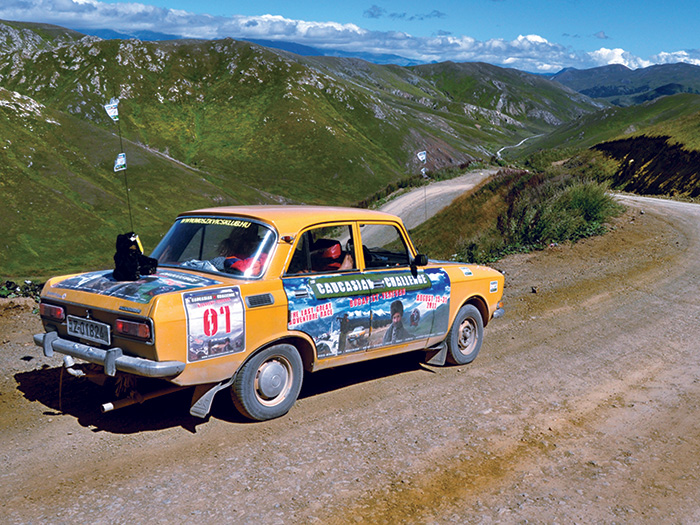
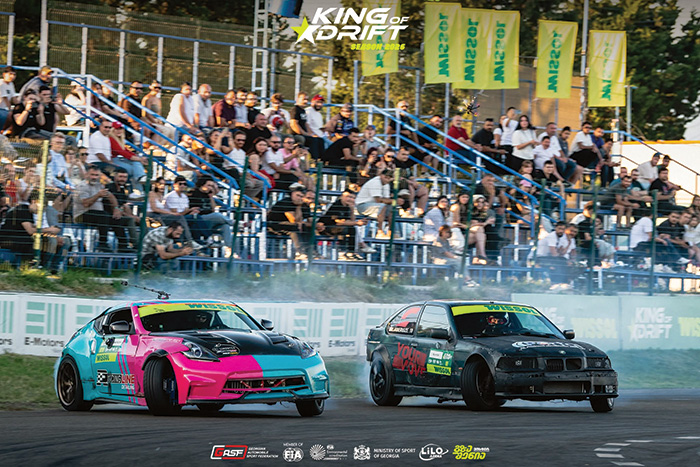
Today’s Georgian rally events, unlike races held at the Rustavi and Lilo circuits, receive relatively little publicity, although they are certainly colorful enough. This summer there was the multi-day classic car rally, Peaks of the Caucasus, which kicked off directly from Tbilisi in early August. Started in 2005, this rally runs an 11-day loop through Georgia mountain regions and desert valleys, featuring key stops in Vardzia, Kutaisi, Mestia, Oni, Gori, and Omalo. Organized by Netherlands-based Via Flamina adventure and travel group, the rally covers well over 2,000 kilometers of diverse geography and showcases an incredible line-up of pre-1985 vintage vehicles driven by international drivers.

The Mongol rally rolls through
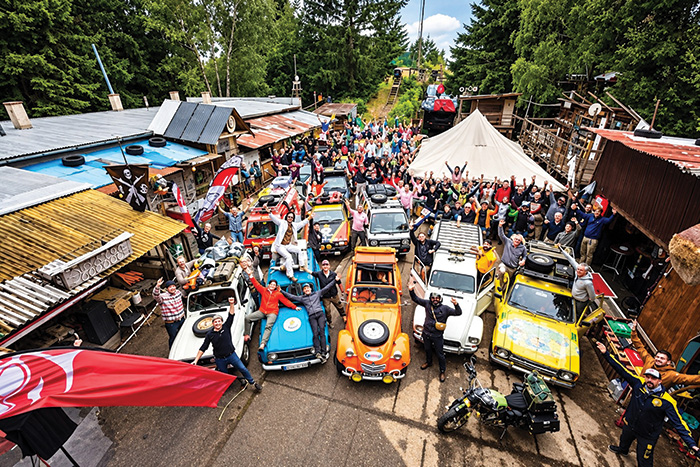
A very different summer event also went barely noticed. The completely crazy 10,000-mile Mongol Rally is organized by the Adventurists, a British-based adventure organization famous for deliberately chaotic events. It describes the rally as “motoring stupidity on a global scale” and also runs the Rickshaw Run, inspired by the philosophy that “the world is far too safe and organised…” These rallies raise money for environmental charities such as Cool Earth, which supports indigenous peoples and local communities to fight the climate change crisis. The Mongol Rally’s craziness and challenge are that participants (who pay to join) must drive an intentionally unsuitable car from Europe (either the UK or Prague) across Europe and Central Asia to eastern Kazakhstan. Drivers can choose how to get there—the Mongol Rally organizers saying there is an “unroute”—but with Russia advised against, the route traversing Georgia is a good option.
The Mongol Rally rules are:
– Inadequate Vehicles: Cars must have a tiny engine, ideally under 1.0 liter (maximum 1.3 liters). Motorbikes must be 125cc or less.
– Completely Unsupported: Teams are entirely on their own. There is no support crew, no breakdown service, and no roadside assistance.
– Charity Fundraising: Each team must raise at least £1,000 for charity.
Advice is given, however, on such points as dealing with Azerbaijan’s closed border: “… you can ship your car in from Tbilisi, capital of Georgia. Then you catch a cheap flight to Baku and re-unite with your car about 5-7 days later. From there you cross the Caspian Sea to Kazakhstan and get stuck into some proper overland stupidity.”
Azerbaijan’s closed border for road traffic seems to have pushed another amateur international rally, the Silk Road Rally, away from the Caucasus. The advertised 2026 route which started in Belgium enroute to Mongolia, went through Iran instead of the Caucasus, but there seems to be no trace online of whether this, and indeed the rally, actually happened.
Where Georgia is gaining traction
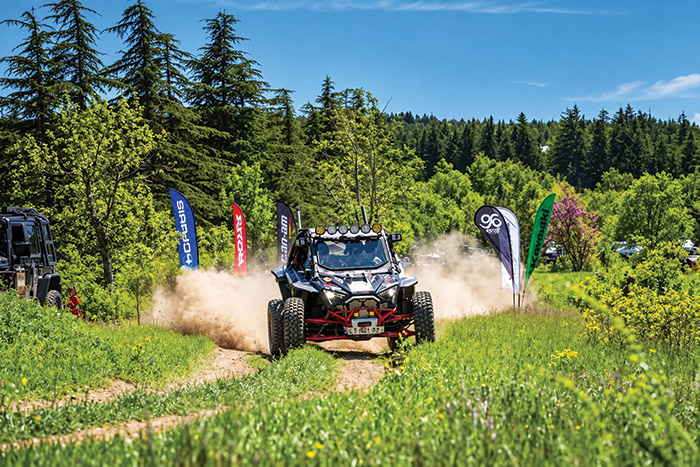
Georgia’s strong motor-mad culture does support, however, small cross-country and off-road events, at which motorists can live their dreams of gaining experience as a first step for large international competitions. Giga Murgulia’s Adventures.ge, which specializes in adventure tourism and motorsport, organizes long-distance endurance events (rally raids) in the desert area in Kakheti. The main event is the Udabno Rally Raid—a cross-country competition held around Udabno and the Gareja semi-desert.
The event is aimed at both professional and amateur competitors and has categories for motorcycles, quads, SSVs, production 4×4 vehicles, and prototype cross-country cars. The organizers advertise stages through the Gareja Desert and surrounding regions, using gravel, rocky tracks, dirt roads, and river crossings—classic cross-country rally environments. But this is for driver rather than spectator enjoyment. The organizers say their goal is to prepare competitors for major events such as the Dakar Rally, cross-country FIA rallies, and the Africa Eco Race, while attracting a strong contingent of foreign drivers.
Could Georgia scale up to the level, for example, of Rally Estonia, which spreads across rural areas in southern Estonia and has drawn in some of the most advanced rally cars? It has hosted rounds of the FIA World Rally Championship and attracts international drivers, teams, spectators, and media and is quite formally organized, not just a cross-country dash! Its attractive rural locations combined with international motoring names also bring visitors to towns and rural areas in southern Estonia, where fans stay in hotels, campsites, and guesthouses. The cars come from several levels of rally competition, from the top international World Rally Championship (WRC) category down to national and junior classes.
Last year, according to local media coverage, Rally Estonia attracted over 50,000 spectators, including foreign tourists, and contributed an estimated EUR 35 million to local businesses. However, this did not happen overnight or cheaply—the cost given in government press releases four years ago was over EUR 4 million. It has taken around ten years to put the rally on the international motoring map and to create the necessary infrastructure, investment coming from national and local government, event creators, and motor industry entrepreneurs.
Another small country which has successfully developed an international rally event is Croatia—the Croatia Rally is a round of the FIA World Rally Championship (WRC) and is usually held on asphalt roads around the Zagreb region. It features challenging mountain roads, fast sections, and tight corners, and attracts top rally drivers from around the world. The government has provided significant public support: for the 2026 and 2027 WRC Croatia Rally events, it committed €2 million per year in co-financing. Benefits to the economy are considerable, however, with hundreds of thousands of visitors attracted to the race, many staying several days, and the estimated impact was put in 2023 at 152 million euros.
Motorsport as a tourism strategy
Azerbaijan is well aware of the tourism potential from rally racing, despite the lack of a strong domestic motorsport base. Its energy revenues gave the government the financial capacity to raise its global profile by launching in 2016 its annual Formula 1 Grand Prix street circuit event in screen-friendly historic Baku, making it part of the spectacle by showcasing the ancient city and Caspian waterfront juxtapositioned against the city’s stunning modern developments. This upmarket image harmonized with the country’s branding strategy.
According to online magazine Raconteur’s report on F1, the budget was a cool $80 million for set-up costs and $12 million to tarmac the roads. Economic benefits, reported by Azerbaijani news agency Report, in the first four years, were assessed at over $500 million, with the marketing aimed at high-value Formula 1 fans in Europe, the Gulf-region, and Asia, and corporate hospitality clients—all air travellers.
Adding to its international motoring tourism profile, this year Azernews reported that a large-scale off-road vehicle rally has been launched under the organization of the Azerbaijan Automobile Federation (AAF). The rally, titled “Offroad,” starts at Heydar Aliyev Center and follows the Baku-Khizi-Shamakhi route. “This thrilling journey across rugged terrain aims to promote motorsports culture in the country, highlight the natural beauty of Azerbaijan’s diverse landscapes, and foster a spirit of adventure and community among participants,” it states.
Georgia’s route forward
Efforts to enter the international rally scene have been made by the Georgian Automobile Sport Federation, which became a member of the Fédération Internationale de l’Automobile (FIA)—the governing body of motor sport—in 2010. One of its stated aims has been the organizing of international motorsport events and helping Georgian competitors reach international races.
Georgia does organize local cross country, long-distance, endurance events (known as rally raids) but these are closer to off-road competitions than to a World Rally Championship (WRC) event. But it has been a struggle to try to qualify as a FIA candidate for a regular WRC rally or rally-raid round—the process used by countries seeking entry to the championship—as there are tough (and expensive) requirements for safety, logistics, and organization.
Ongoing road development may raise hopes that, for example, a rally through Tusheti’s stomach-churning bends and precipitous inclines could be launched on the Pshaveli-Abano-Omalo pass. Reaching up to nearly 3,000 meters, this is recognized internationally as an “extreme road,” but the 72 million GEL ($27.7 million) project announced by Georgia’s Department of Roads, which started in July, is aimed at making the everyday use of the road safer, not to oblige petrol-heads.
Whether it is the high organization costs involved, a national tourism strategy that focuses on wine and nature, lack of infrastructure, government spending priorities, the country’s motorsport profile, or lack of sponsors ready to pour in cash, Georgia has not yet been able to meet conditions to become a round in a WRC event. There is also a lot of regional competition nearby, such as in Turkey and Central Asia.
The view is that by concentrating on cross-country events, Georgia is already focusing on its most realistic international motorsport rally opportunity. FIA officials have repeatedly visited Georgia to discuss development and motorsport expansion, but for now there is more attention being paid to circuit and stock car racing at the Rustavi track than on Georgia’s mountain roads and deserts. The Udabno Rally Raid organizers may be positioning “to become one of the stages of the World Rally-Raid Championship.” With the aim of joining the likes of Saudi Arabia’s Dakar Rally and the Abu Dhabi Desert Challenge, they are tightening standards every year. But for now, this remains a dream.