
Grape expectations: Georgia’s indigenous varieties make a comeback
Georgia has all that it takes and more for success in international wine marketing. Few countries have such an abundance of stories or vines. Increasingly capitalizing on this competitive advantage, Georgia’s major wine companies have stopped being shy about producing from the lesser known of the country’s 500+ indigenous grape varieties. Delving into the history of Georgia’s rich variety of grapes and emulating the local, small natural wine producers, the major commercial companies are winning awards and sales.
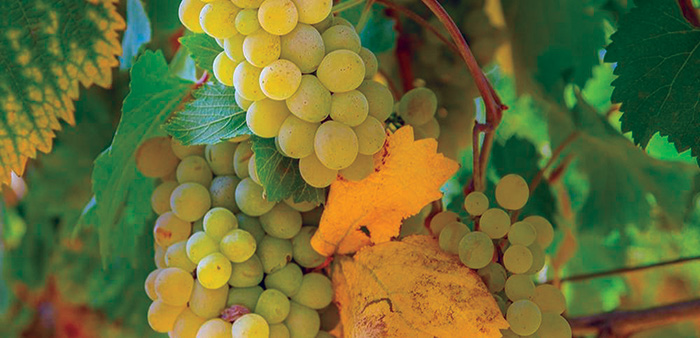
This summer a Kisi wine—one of the biggest of the revival successes—received exceptional recognition, winning one of the two Platinum medals at the prestigious World Wine Awards held by Decanter, the top wine media brand, which is read in over 90 countries. This was Georgian Wine House’s George Kiazo range Qvevri Kisi 2024. The other Platinum award went to a Tbilvino single Vineyard Aleksandrouli Shashiani, with the vine grown in Kakheti and not its native Racha. These two beat over 17,000 entries.
Leading Decanter wine writer Andrew Jefford is a big fan. Referring in the magazine to the expanding range of wines that Georgian producers are now making from the country’s “treasure chest of grape varieties,” he praised the “much wider aesthetic spectrum,” calling the wines he tasted “thrilling.”
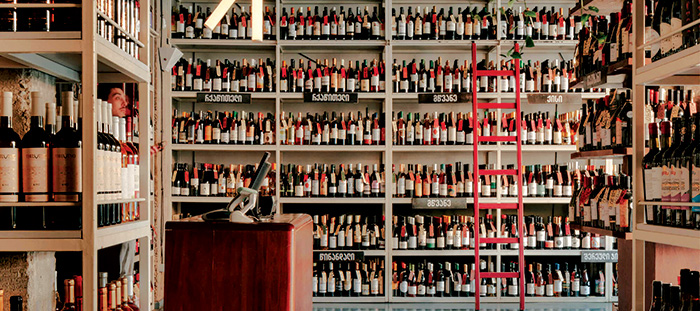
For the wine drinker, the advent of so many new and lauded Georgian varietal wines mean they are now likely to be found on menus at premier bars and restaurants across the world, such as the Ritz in London and Paris, London’s Michelin-starred Trivet, or New York’s exclusive The History. The serious commercial prospects for the revivals are indicated by the number of major Georgian companies showing commitment to preserving and reintroducing indigenous grapes, featuring varietal wines to their lists. This includes Shumi, Teliani Valley, Tbilvino, Château Mukhrani, Kindzmarauli Marani, Askaneli Brothers, and Khareba.
A new generation of Georgian grapes
While Kisi is the star revival, other grapes emerging from obscurity include:
White grapes
Khikhvi. Once relatively rare, Khikhvi is increasingly featured in premium blends and single-varietal bottlings.
Mtsvane Kakhuri. Long overshadowed by Rkatsiteli, Mtsvane has gained popularity for its floral aromas, freshness, and aging potential. Many producers now bottle it on its own rather than blending it.
Chinuri. Central Georgia’s Chinuri is the backbone of several sparkling wine projects and also produces elegant still wines with bright acidity.
Tsitska and Tsolikouri. These western Georgian varieties are seeing renewed interest, particularly in Imereti. They produce fresh whites as well as skin-contact wines.
Krakhuna. Another Imeretian variety valued for its body and structure, increasingly bottled as a premium single-varietal wine.
Red grapes
Tavkveri. Once close to disappearing commercially, it is used for reds, rosés, and sparkling wines.
Shavkapito. A historic grape from central Georgia that produces elegant, spicy reds. It is enjoying a steady revival among quality-focused producers.
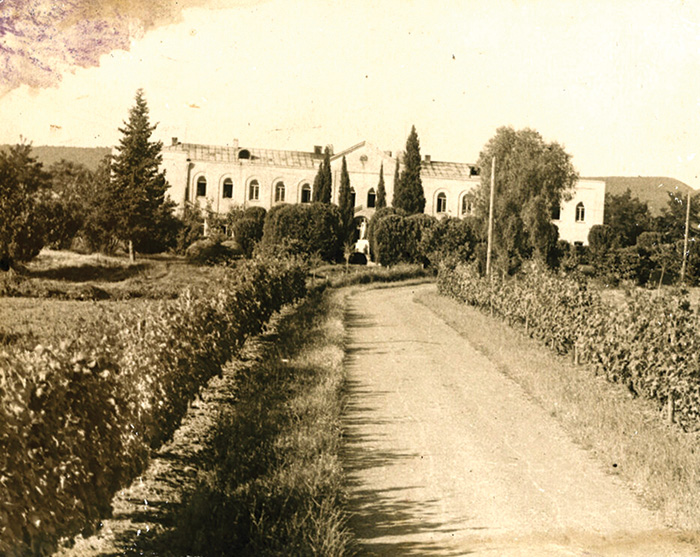
Usakhelouri. One of Georgia’s rarest grapes, producing highly sought-after naturally semi-sweet red wines in very limited quantities.
Ojaleshi. Native to western Georgia and known for fragrant, naturally semi-sweet wines, and increasingly for dry styles.
Aleksandrouli and Mujuretuli. These grapes are central to the famous appellation Khvanchkara, but growers are also experimenting with dry expressions.
Wines from all of these grapes can be found at the Tbilisi and Batumi outlets of wine retailer 8000 Vintages. By stocking hundreds of small as well as major producers’ varietal wines, 8000 Vintages has been a key contributor to the revival of Georgian grape varieties.
Internationally, Kisi has become one of the strongest success stories, said Glug Magazine, because it “combines distinctive aromas and adaptability to both conventional and qvevri winemaking.” Khikhvi is being backed to become the next white revival success while Tavkveri and Shavkapito are among the leading candidates on the red side.
Decanter has for years been a big fan of indigenous grapes, well ahead of the current trade interest as major brands respond to a mix of market pressure, climate reality, and changing consumer tastes. Right now, wineries internationally as well as in Georgia are not chasing vines randomly, rather, in these tough times, they are trying to solve real problems.
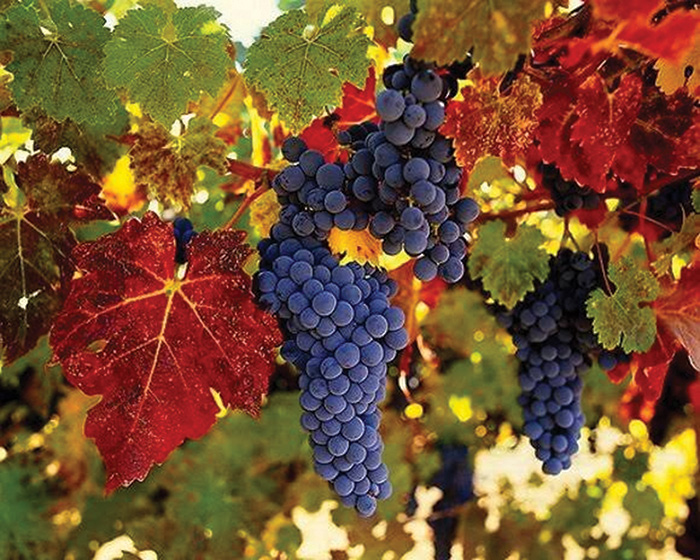
Wine grapes are extremely climate sensitive. Rising temperatures and drought stress in traditional regions across Europe, Australia and the U.S. are forcing producers to more resilient vines. As part of their risk management, companies are reviving older forgotten varieties, which time has given disease, heat, and drought resistance.
The wine market is crowded. Consumers have become bored with the usual major grapes and are looking for new styles and a bottle from an unusual vine stands out—it can own a category narrative, gain attention, and allow higher margins.
Consumers in most countries are steadily reducing their wine consumption for budget and health reasons. Increasing competition from beer and spirits means drinkers need to be tempted.
A heritage thousands of years in the making
Georgia’s huge vine diversity arose through thousands of years of local selection in farming communities in different valleys, climates, and soils. The result is an exceptionally localized viticulture; mountain villages maintaining their own cultivars; commercial vineyards sited on lowlands; and the various varieties grown adapted to particular soils or wine styles.
Documentation of the vast array of Georgian vines was begun by Russian ampelographers in the 19th century, the first recognition that Georgia possessed an unusually rich grape flora. But it was the prominent 19th-century Georgian agronomist Vladimir Staroselsky who played a most vital role, saving the grapevine heritage of Georgia during the devastating worldwide late 19th-century phylloxera outbreak.
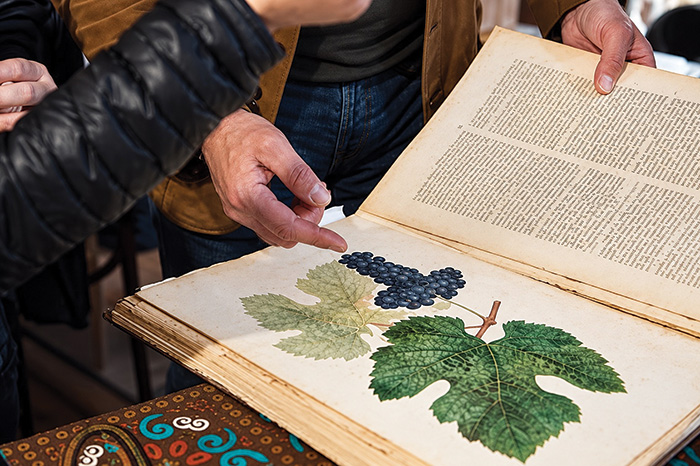
Acting as a senior agronomist for the Caucasus, Staroselsky went to France and saw that the only permanent solution was grafting local varieties onto immune American rootstocks. He successfully returned to Georgia with these phylloxera-resistant vines and established a mother nursery in western Georgia. This nursery grew into the landmark Sakara Viticulture Experimental Station. Staroselsky also published (in 1893) the very first ampelography (the botanical classification and description of grapevines) of Imeretian grape varieties. This work laid the foundation for modern Georgian grapevine conservation.
So, Georgia’s vines have had a succession of custodians. The diversity has been created over millennia by families on their village homesteads, on noble estates, in monasteries, and at research stations. They were grown in the first six thousand years of their history by agricultural and tribal communities, then, as the pre-Christian era drew to a close, vines were recorded on estates as wine became an important trading commodity with the Greeks and Romans. Several hundred years later, when wine had been incorporated into the Eucharist, monasteries began maintaining vineyards and became centers of wine production—medieval texts have been discovered discussing vineyard management and wine production at Ikalto and Nekresi.
Golden Age records refer to large royal vineyards and extensive marani construction under David the Builder and Queen Tamar. Writing in the 1930s, pioneering Georgian viticulturist Solomon Cholokashvili noted that records from the 11th–13th centuries already listed numerous grape varieties, including Rkatsiteli, Saperavi, Khikhvi and Mtsvivani, which remain important to Georgian winemaking today.
Families and monasteries preserved indigenous varieties through successive Mongol, Persian, and Ottoman invasions, despite widespread destruction. Vineyard restoration began in the 18th century under King Erekle II and was later advanced by aristocratic families. The Chavchavadzes developed the Tsinandali estate, while the Mukhrani, Orbeliani, Guramishvili and Bagrationi families helped expand production, develop modern commercial winemaking, and open export markets in Europe.
Even though the Soviet period destroyed many commercial vineyards, rural families throughout the country kept their vines and marani and went on producing for themselves and their villages as ever before. So, come the 1990s there was a vast resource of indigenous vines—albeit scattered, largely undocumented and untapped, across the country.
Many varieties also survived in scientific collections. During the Soviet period, research vineyards established across Georgia preserved diverse native vines even as many disappeared from commercial cultivation. In the early 1930s, the Institute of Viticulture and Winemaking established a major state collection in Telavi, initially conserving around 255 local Georgian varieties. The second major center was the Dighomi grapevine collection associated with the Georgian Agricultural Institute in Tbilisi, which is recorded as holding around 3,000 Georgian and foreign varieties. Today, the most important institution is the Jighaura Experimental and Demonstration Base of the Scientific-Research Center of Agriculture (SRCA) in Mtskheta municipality. It has become the source of authenticated planting material for many forgotten varieties.
From preservation to revival
The modern revival of Georgia’s indigenous varieties has developed gradually over several decades, with commercialization coming relatively recently. Scientific preservation efforts culminated in the 1960 publication of the Ampelography of Georgia, which catalogued 525 indigenous varieties. Yet the collapse of the Soviet system brought widespread vineyard abandonment rather than immediate revival. At the same time, freedom from the Soviet focus on a limited number of commercially useful grapes allowed some winemakers to begin building their own collections of indigenous varieties. Notably, Shumi Winery established an important private collection in the 1990s.
At the start of the new millennium, the official Wines of Georgia history states, the revival started to take off, beginning “with a few winemakers in the early 2000s.” It attributes the revival to renewed interest in traditional wine and indigenous grapes, stimulated in part by international interest in natural and small-grower wines. The important people in Georgia were the Chinuri specialist Iago Bitarishvili (Iago’s wine) and Soliko Tsashvili Tsaishvili (Our Wine) who were the first to bring their bottles of Georgian natural wine to the international market. With a band of eight other natural wine producers, they gave tremendous impetus to the movement by opening in 2012 the wine bar Vino Underground, and five years later starting the Natural Wine Association. These created an international window, and a base for bringing the small winemakers and their wines from indigenous vines to the attention of wine writers and importers. Wine bars and festivals selling small producer wines have since proliferated, drawing drinkers with their distinct flavors.
At times the quest to revive Georgia’s indigenous grape varieties reads like a mystery story. Winemaker Giorgi Natenadze has searched the forests of Samtskhe-Javakheti for ancient vines surviving from the maghlari system used in the former Kingdom of Meskheti before the Ottoman invasions. Meanwhile, Georgia’s Scientific-Research Center of Agriculture and the National Wine Agency have worked to identify, study and propagate nearly extinct indigenous varieties, including vines found growing in the wild.
Many of these remain experimental, although they are beginning to appear in small commercial releases (8000 Vintages is a source.) But the list is intriguing, including ones in abandoned vineyards that have yet to be identified and the “ghost” grapes—old names for which the vines have not yet been found. So, Georgia’s treasury is not only still growing. As survivors over millennia in harsh conditions, many of the revivals could contribute to international work of developing heat and drought resilience for growers in Europe and the U.S. As Andrew Jefford wrote in Decanter last year:“…this gene bank not only gives Georgia the wherewithal to build a wine offer of remarkable complexity and diversity for itself, but it constitutes a global resource, too. Our existing ‘classical’ variety (the major European grapes) set is already climate-challenged, and in any case over-narrow; we need this resource for the future.”