
The vineyards time forgot: rediscovering Georgia’s living wine heritage
For a country that proudly calls itself the Cradle of Wine, Georgia has paid surprisingly little attention to one of its most valuable viticultural assets: old vines. Now, as global demand for authenticity, heritage, and natural wines grows, these forgotten vineyards are emerging as a powerful new chapter in Georgia’s wine story.
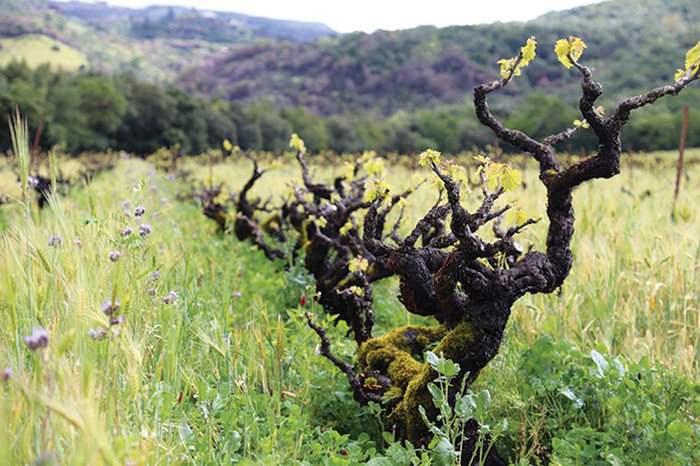
A Georgian paradox may finally be coming to an end. For years, the existence of old vines in the country that proudly celebrates itself as the Cradle of Wine, with 8,000 years of vine cultivation, has received surprisingly little official recognition. Relicts of the Soviet era’s mass destruction of traditional viticulture, the subsequent shift to cash crops, and more recently the focus on Russia’s vast export market, these old vines have survived mainly on small family farms, in far-flung valleys, and on steep hillsides, remaining largely the domain of small producers.
But small wineries—mostly natural wine ones—are expanding export sales of their old vine production, winning international plaudits as far afield as the U.S., U.K., Europe, and Asia. At the London Wine Fair in May, two of the few major companies who have old vine premium brands, KTW and Corporation Kindzmarauli, were exhibiting—and this story is now being integrated into the Georgian marketing campaign.
What’s more, a major industry advocate for old vine preservation, the International Organization of Vine and Wine (OIV), is holding its 2027 annual conference in Georgia. The OIV, one of whose responsibilities is to establish and maintain standards for the global wine industry, has become a major advocate for old vines, arguing that their longevity offers valuable insights into climate resilience while also contributing greater depth and complexity of flavor to the wines they produce.
How does a vine qualify for this appellation? According to the OIV, a vine must be at least 35 years old to be considered an old vine, while a vineyard qualifies as “old” only if at least 85% of its vines are 35 years old or older. Vines can, and are, however, living and producing for well over a hundred years and more.
The Old Vine Registry is a relatively new international online database that aims to be the most comprehensive resource for information about old-vine vineyards for importers, wine lovers, and academics. The registry, which is UK-based, was launched by a group of wine lovers and experts who describe themselves as “passionate about preserving and celebrating the unique character of old vines.”
Each entry includes details such as the location of the vineyard, the grape varieties grown, the age of the vines, and the winemaker responsible for producing the wines. It has developed alongside the Old Vine Conference, a global advocacy movement, and other organizations seeking to preserve old vineyards in the U.S., Europe, and Australia.
Dozens of small Georgian companies are producing delicious wines from the wide variety of old vines on their plots. Yet, among the 42 countries on the registry, Georgia currently has only ten of the 10,000 or so listed, while Armenia, for example, has declared 269.
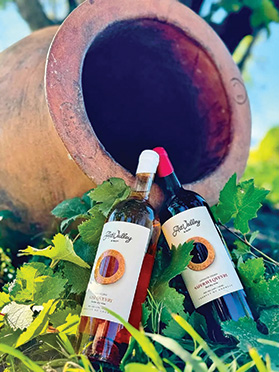
The few Georgian companies that have made it to the registry include ArtValley Winery, planted by the grandfather of the current owner Beka Odishelashvili over 50 years ago. Then there is Alavidze, where Giorgi Alavidze believes his Tsitska and Tsolikouri vines were planted around the beginning of the last millennium. There is Tsikare in Racha, where the Rkatsiteli and Asureruli grapes are thought by owner Zurab Tsitlauri to have been planted by his grandfather over 50 years ago. The latest entrant is Kakhetian Manavino at Manavi, where Elizbar Arunashvili’s great-grandfather planted a range of vines, including Manavian Mtsvane.
Why old vines matter
As voiced by one of the most important Californian vineyard groups, the Lodi appellation’s grower association: “Saving old vines is not a romantic endeavor, it is addressing a planetary crisis…Old vines carry the secrets of survival and have adapted to stress over decades and even centuries. They are often more resilient in times of drought and heatwave, they have learned to live with or develop immunity to pests and diseases, they have survived extreme weather events.”
Unlike young vines, they don’t need to be irrigated and they need less, if any, chemical inputs to survive—a big plus for the natural wine movement. The Lodi blog adds: “Old vineyards are also often full of clonal diversity and rare varieties. The genes of old vines can be studied, and old-vine material can be propagated for more resilient young vines.”
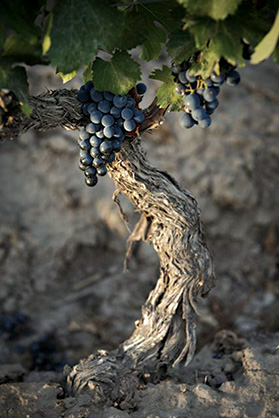
Interest in preserving old vines is international and becoming more serious. Following the OIV’s introduction of official benchmarks in 2024, countries worldwide have tightened certification frameworks, requiring old vineyards to be registered and mapped. The EU’s Wine Package requires detail of ingredients, and most wineries are relying on a non-tracking, mandatory QR code on the back of the label to provide data. For historic vineyards, the digital e-label has become the primary tool to host verifiable provenance data, including the age of vines. Georgia is in general following the EU route, and this could bring more recognition for its old vine heritage.
Research on the benefits of old vines is growing as vineyards face climate-change crises; there are dedicated programs in South Africa, Spain, and Australia, to name a few countries. France has a specific label—vieilles vignes—for wines from old vines. In Georgia, wild vines have received vastly more attention than old ones, ironically because although they also offer clues to climate change and disease survival, they also help make Georgia’s case as the homeland of wine.
More high-profile is the Meskheti Ancient Vine Project, an agricultural and cultural revival initiative in Georgia’s southern Samtskhe-Javakheti region. Spearheaded by local expert Giorgi Natenadze (founder of Natenadze’s Wine Cellar), the project has rescued and propagated rare, pre-Ottoman Meskhetian grape varieties that were almost extinct. Natenadze has searched for relicts of these vines climbing entangled in local forests, probably planted hundreds of years ago using the maghlari system.
Now their cuttings are growing as clones in his restored ancient terraced vineyards (in the Mtkvari River gorge, just a few kilometers downstream from the Vardzia Cave Monastery) and other growers’ vineyards. While a couple of the ancient forest vines do feature in the Old Vine Registry, these clones cannot qualify as old vines.
In Georgia, the vineyard picture as a whole is a vague one, and maybe the adoption of the EU certification system will change this. There are, according to official figures from the National Wine Agency, around 22,000 commercial wine growers who deliver their grapes to commercial and state enterprises during the harvest season. But, that does not give a full understanding of Georgian viticulture: the Ministry of Tourism’s site lists the number of family wineries and maranis as 100,000-150,000, but no detail is available.
Georgia’s old vines often owe their continued existence to the fact that they are vines the farmers inherited, but primarily to their taste. Parcels of these vines are scattered throughout the country, mostly where families make their living selling to local bars and restaurants or producing for their own guesthouses. Some farmers sell their old vine production to major wine companies and more sell to popular artisan wine-makers who do not have enough grapes to meet demand for their wines. Other producers are vignerons as a hobby, engaged in businesses or professional work and wanting to indulge in viticulture because they love wine.
A growing market for old-vine wines
The presence of old-vine wines in the Georgian market has grown steadily and gained prestige over the past 15 years, particularly since the opening of Tbilisi’s first natural wine bar, Vino Underground, in May 2012. Founded by a collective of Georgian artisan winemakers, it pioneered the city’s natural wine movement by showcasing traditional qvevri wines from independent, small-scale producers. All have old vines in their vineyards and most, catering for the international enthusiasm for natural wines, are still producing and selling in Georgia and abroad. They were Niki Antadze (Antadzeebis Marani), Ramaz Nikoladze (Nikoladzeebis Marani), Iago Bitarishvili (Iagos Winery), Beka Gotsadze (Gotsa Family Wines), John Wurdeman (Pheasant’s Tears Winery), Kakha Berishvili (Artanuli Gvino), and Zurab Topuridze (Iberieli).
More than a decade later, Vino Underground is still going strong, and Georgia’s natural wine sector has grown enormously. While still predominantly centered on qvevri winemaking, it has retained the community spirit that defined its early years, with producers jointly organizing festivals and events and supporting one another. Vigorous in their enthusiasm for natural wine, they have also created the Zero Compromise movement—Georgia’s version of the Raw Wine movement—and its minimal intervention winemaking draws the international industry to its festivals.
There are now several more Tbilisi bars and shops specializing in small winery productions, natural wines, and those sourced from historic, old-vine vineyards. Dadi wine bar and shop in Tbilisi’s Old Town is another dedicated to natural and handcrafted wines, and also frequently stocks micro-lots of old-vine wines.
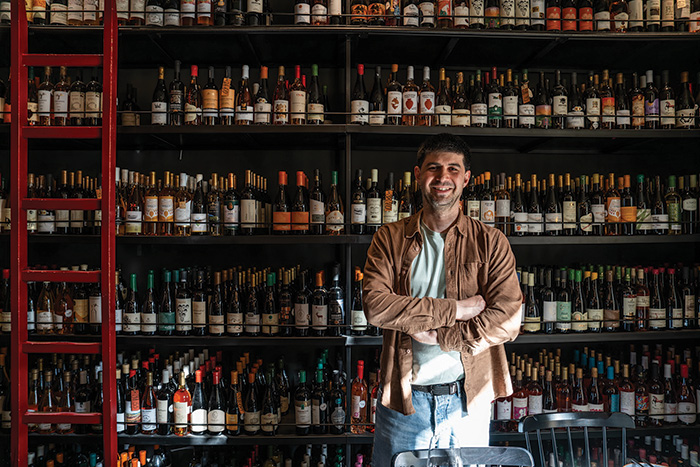
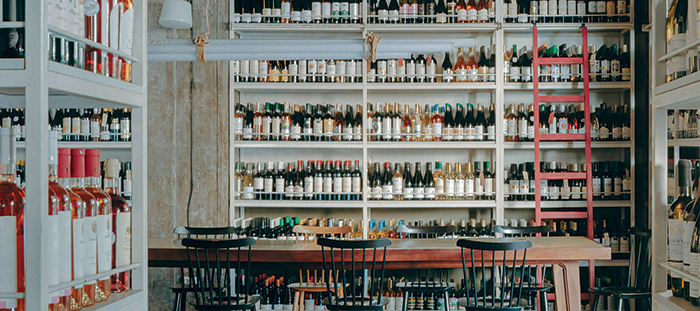
Obviously flourishing is 8000 Vintages, which now has five shop/wine bar/cafes outlets in Tbilisi and Batumi, selling an amazingly wide number of natural wines, some from old vines (all selected in blind tastings). Its crowded shelves bear witness to the numbers of Georgia’s small wineries. When Irakli Chkhaidze started 8000 Vintages ten years ago, “we were collaborating with 50 wineries—today, we work with nearly 550.” They make up 80% of his stock, and are bought predominantly by locals, although his restaurant is on most wine-loving tourists’ lists.
This footfall is witness to both the increasing popularity of natural wines, but also to his marketing judgement. Georgians are buying because, he says, “to some extent, it fulfills their desire to support local, independent businesses. Behind every bottle of wine, there is a real person and a unique story, which is an incredibly powerful tool that drives sales.”
The Georgian winemakers keeping old vines alive
Life for an artisan wine maker with no other income is often a struggle, with lack of volume limiting revenue. Nurturing old vines is hard work, requiring, as Iago Bitarishvili says, “patience and careful stewardship.” Ramaz Nikoladze does not mince his words: “It is hard work.” These two are positively famous in the international natural wine sphere and have achieved successes to which most small Georgian companies aspire.
At Nikoladzeebis Marani in Imereti, Ramaz Nikoladze produces seven natural, biodynamic wines from his wonderfully chaotical wild vineyard. The land has been in his family for four generations and some of his vines are as much as 70 years old, the varieties allowing him to produce Dzvelshavi, Tsitska, Tsitska Tsolikouri, Solikouri, and Motskobili. Bringing in grapes from old vines owned by other family members takes his production up to 8,000 bottles a year, and he has won customers around the world.
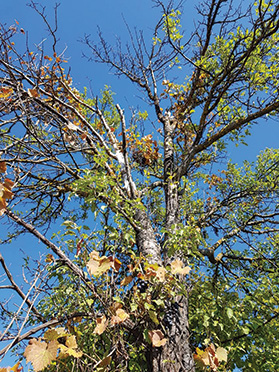
Iago Bitarishvili, a leader in the natural and qvevri wine movements, is recognised as Georgia’s expert on the Chinuri grape variety. He was one Georgia’s firsts to obtain bio certification, doing so in 2005. He has two hectares of vines aged 60 years, more on his vineyard at Chardakhi in the Mtskheta region, and has been expanding. His production is slightly more than Ramaz’s at around 10,000 bottles—with exports taking most of his bottles. Generous with his time and energy in support of his fellow small producers, he organizes some of the festivals that small producers hold regularly across the country to generate sales.
The tough life of artisan wine making has created a host of strong characters. Far too numerous to describe in full, they include the diminutive Miranda Chkhetiani, whose beautiful Tvishi winery (Miranda’s Marani) in a steep-sided limestone valley in Lechkhumi produces naturally semi-sweet Tsolikouri. Over in Ozurgeti, Nodo’s winery is producing six different wines including one unusual one, Mtevandidi.
Archil Winery’s story is that in 2010, Archil Utiashvili purchased a neglected 40-year-old vineyard near Telavi—0.84 hectares of Rkatsiteli and Saperavi vines planted in 1970. Every expert advised him to uproot them, he says. But he saw something different in those twisted, sparse vines; not economic loss, “but an old man asking for help”. Years of restoration followed and production from their harvests are now sold worldwide and admired by international wine magazines like Decanter.
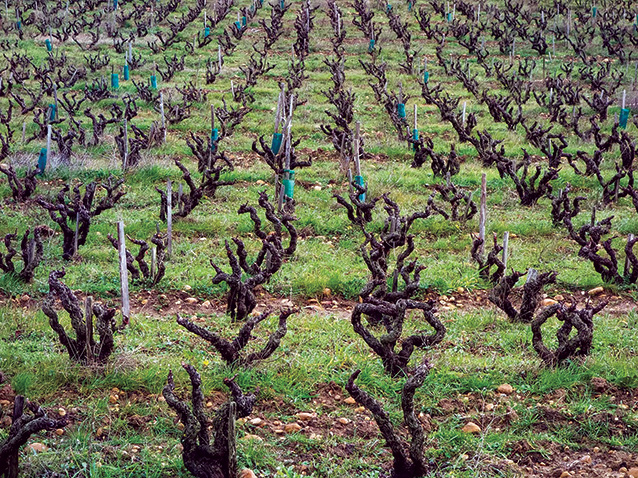
Founded by winemaker Grigol Kurashvili in 2017, Bolnisi Old Wine Cellar continues a legacy of family winemaking. Their acclaimed Rkatsiteli is sourced from an ancestral vineyard in Bolnisi that winemaker Grigol’s father, Murad, preserved in 1996. Today, these deeply rooted vines are over 40 to 50 years old.
Probably the most well-known internationally of Georgian winemakers is the Dakishvili family, not least because with four generations of winemakers, they are now a wine dynasty. Gogi and his son Temur advise major groups and grow their family production. They have specifically sought out Kakhetian vineyards with old vines and their Orgo, Teleda, and other brands have old vine lines.
A necessary sideline for many small winemakers is a guesthouse or small hotel. Nika Vacheishvili’s Marani has done this successfully at its beautiful Shida Kartli site at Didi Ateni. It has been able to expand, helped by the EU4Business Initiative, to 13 rooms, attracting international guests—and no longer has spare wine to sell off site.
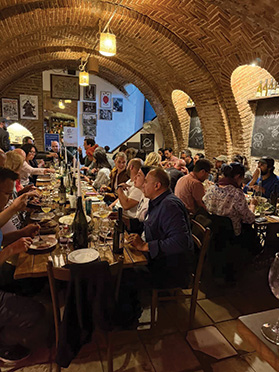
The Georgian natural wine scene is by no means exclusively Georgian. In fact, John Wurdeman was an artist in New Mexico before coming to Signaghi to establish Pheasant’s Tears. He then expanded beyond the winery with a thriving restaurant business. While his vineyards do have old vines, he and his business partner Gela Patalishvili are better known, however, for propagating and planting nearly-lost old varietals.
Another winemaker that has adopted Georgia is Frenchman Bastien Warskotte, who built the boutique label Ori Marani, which produces sparkling wines in Igoeti, Shida Kartli. He and his Georgian wife, Nino, set up their winery in 2016, and—unable as of yet to buy their own vineyards—source locally from old vine growers.
Georgia’s natural wine story, with its caste of so many individual producers, grape varieties, and wines, appeals not only to the Georgians. That tale is told by the export successes of so many, despite their small harvests. Fortunately, the global trend towards natural wines enables them to sell at the premium end of the market: €15 to €20 is the range wine enthusiasts will pay. 8000 Vintages has opened a thriving overseas branch in Berlin, and from there is dispatching wines across most of Europe. Small orders cost €10 for delivery of 1–5 bottles, while larger orders are free.
Explaining Georgian natural wine’s success Irakli Chkhaidze says: “If there is any wine that inherently aligns with the philosophy of natural wine, it is Georgian wine. One of the main prerequisites for natural wine is fermentation using wild, ambient yeasts—and in Georgia, during the skin-contact fermentation process (on the chacha), we have always naturally relied on these native yeasts.”
Adding the old vines to the country’s narrative provides a premium, verifiable, and culturally rich angle that appeals to modern wine consumers, and ecotourists, responding to the global interest in natural wines. It directly addresses the market’s growing demand for authenticity and heritage, enhancing the epithet “Cradle of Wine.”