
TBC Capital || Retail rivalry continues to rise as FMCG growth moderates in Georgia

After several years of rapid expansion, Georgia’s fast-moving consumer goods (FMCG) market is entering a more measured phase—one shaped by stabilizing macro trends, changing household dynamics, and intensifying competition among leading retailers. TBC Capital’s latest FMCG Sector Overview shows that, despite solid fundamentals, shifting consumer behavior and market dynamics are redefining how and where Georgians shop.
Georgia’s FMCG market has continued to expand at a faster pace than expected, reaching GEL 22.1 billion in 2024 and projected to increase to GEL 24.2 billion (+9.8%) in 2025. Despite this resilience, TBC Capital expects growth to stabilize in the short term after several years of exceptional performance fueled by migration inflows, wage growth, tourism recovery, increased restaurant activity, and high inflation rates.
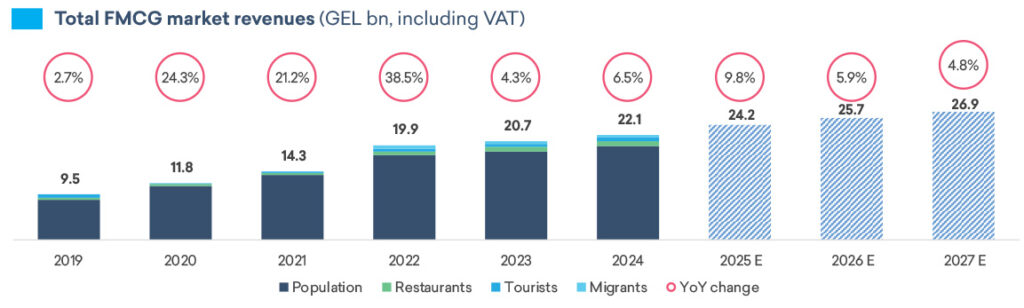
Migrant spending, which provided a major temporary boost in 2022–23, is expected to decline 5% in 2026 and fall a further 12% in 2027. TBC Capital Vice President of Research Andro Tvaliasvhili notes, however, that despite this expected dip, core domestic components remain solid: nominal wages are set to rise by 7–8% annually, a higher growth compared to the expected inflation rate, and restaurant turnover by 10–12% in the next two years, while tourism inflows are projected to reach $5.3 billion by 2027.
“We evaluated four major components of FMCG dynamics,” says Tvaliashvili. “Of those, migrant expenditures is the only compo-nent set to decline. This currently only makes up about 2% of FMCG revenues; so, although this figure could be greatly impacted by geopolitical developments in the region and a possible peace agreement between Russia and Ukraine, we don’t expect it to have a major impact on Georgia’s FMCG market.”
Modern trade gains ground on the back of regional expansion
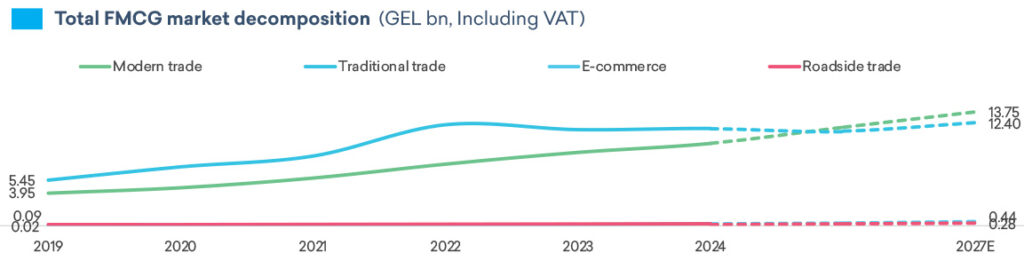
Modern trade, which includes FMCG sales in supermarkets, hypermarkets, convenience chains, pharmacies, and liquor stores has expanded steadily since 2019 and is on track to overtake traditional trade by 2027 at a value of GEL13.7 billion.
Tbilisi remains the most saturated market, with modern grocery retailers maintaining a stable 54% penetration rate. Regional pene-tration is now the main driver of expansion—reaching 28% in 9M25 compared to 25% a year earlier.
Consumer habits
TBC Capital notes several important factors influencing how Georgians shop. One clear demographic change is the steady decline in household size, which fell from 3.5 people in 2019 to 3.2 in 2024—moving closer to the EU range of 2.0–2.5. Smaller house-holds tend to shop more frequently and in smaller quantities, increasing per-capita FMCG demand.
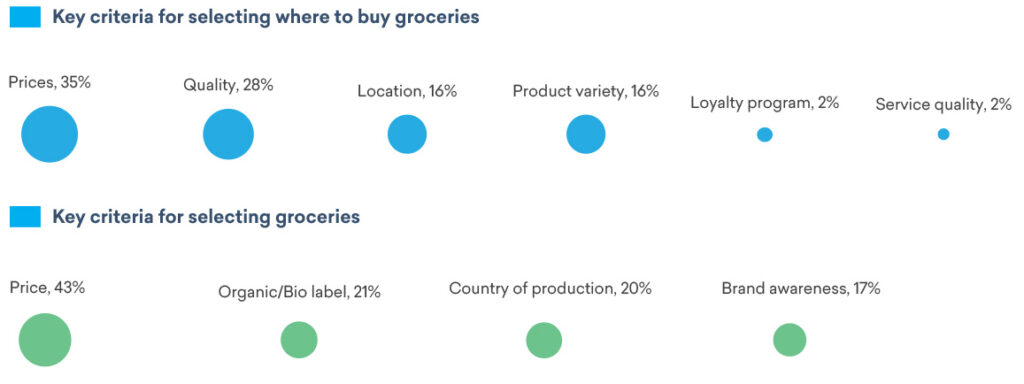
These consumers are also highly price sensitive. Price leads both store choice (35%) and product selection (43%), far outweighing factors like quality, location, or brand recognition. “This price-driven mindset is shaping the competitive landscape,” notes Tvaliashvili, reinforcing the importance of discount strategies in a market characterized by intense competition.
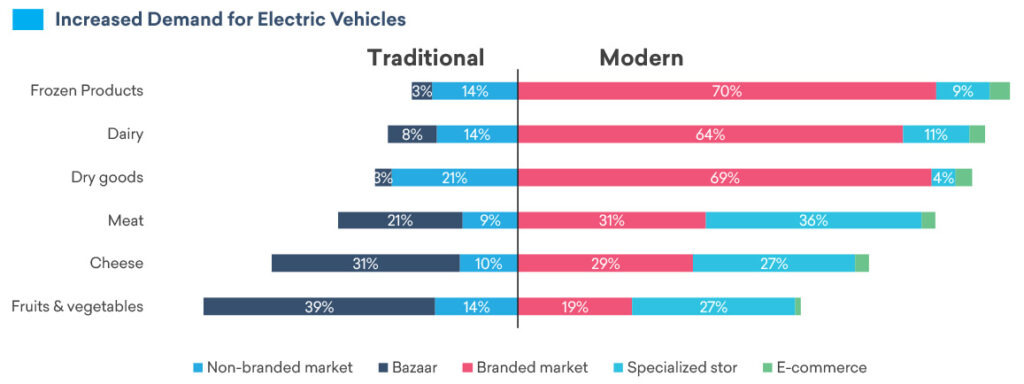
Despite modern trade’s growth, traditional formats remain dominant in fresh categories. Bazaars and non-branded stores still lead in sales of fruits and vegetables, cheese, and meat—categories where consumers trust long-standing habits and perceived fresh-ness over convenience.
E-commerce also continues to play only a marginal role. A full 70% of consumers never purchase groceries online, and of the 30%who do, 69% rely on third-party couriers, not retailer apps or websites.
Looking ahead
Georgia’s FMCG sector remains fundamentally strong, but its next chapter will be shaped by more measured growth, increased competition, intensifying price sensitivity, and continued modernization. Looking ahead, Tvaliashvili says the FMCG market will be highly impacted by price considerations: “Even though overall inflation has remained moderate, groceries have seen double-digit inflation in Georgia over the past few months.” “If we look at the consumer basket, almost 45% of expenditures for Georgians right now go to groceries. This is a major burden for domestic operations,” adds Tvaliashvili. “We expect prices to continue to be a major determinant for the FMCG market in the months ahead.”