
Investment News
Investor.ge provides a brief update on investments and changes in government policy that could impact the business environment. Information in this issue was taken from BM.ge

National Bank raises refinancing rate to 8.25%
The Monetary Policy Committee of the National Bank of Georgia (NBG) increased the refinancing rate by 0.25 percentage points to 8.25% on May 6, marking the first rate increase since May 2024.
The central bank linked the decision to inflationary pressures caused by the war in the Middle East and disruptions to transportation through the Strait of Hormuz. Annual inflation reached 5.9% in April, the highest level in two years and significantly above the bank’s 3% target. Core inflation stood at 3.2%, while service inflation reached 3.7%.
According to the NBG, rising global energy prices and higher transportation costs have increased inflation risks, while ongoing geopolitical uncertainty continues to pressure international supply chains. At the same time, the bank noted that Georgia’s economy remains strong, with economic activity increasing 9.1% in the first quarter of 2026.
The NBG said the rate increase is intended to keep inflation expectations anchored and reduce the risk of broader inflationary effects spreading through the economy.
EU and UK visitors drive tourism revenues, TBC Capital says
On May 28, TBC Capital reported that the EU and the United Kingdom were the most important contributors to Georgia’s tourism revenues in the first quarter of 2026, despite ranking fourth in visitor flows. According to the report, this indicates that visitors from these markets spend more on average than those from other major source markets.
Georgia received $830 million in international tourism revenues in the first quarter, up 0.5% year-on-year. Revenues from the EU and UK increased by 36% to $141 million, followed by Russia with $124 million, down 12%, and Turkey with $120 million, up 12%. TBC Capital noted that revenue growth from the EU and UK, Turkey, and Ukraine helped balance declines from Russia and Israel.
Tether submits GELT registration application to central bank
On May 27, the National Bank of Georgia confirmed that Tether has submitted a registration application for GELT, the first lari-denominated stable virtual asset. The project was presented on May 25, with Tether CEO Paolo Ardoino noting that the company still needs approval from the NBG before launching operations.
Under regulations adopted on March 6, stable virtual asset issuers in Georgia must maintain reserves equal to 100% of the funds received from users. According to the NBG, Georgia is the first country in the region to define rules for issuing stable virtual assets. GELT is expected to be backed one-to-one by lari reserves and used for crypto transfers and transactions.
Tbilisi population approaches 1.4 million
Geostat published updated demographic data on May 23 showing that Tbilisi’s population reached approximately 1.39 million residents in 2025, continuing its long-term growth trend.
Batumi’s population exceeded 246,300 residents, while population declines were observed in several other regions of the country. According to the statistics, Tbilisi remains the dominant urban center in Georgia, concentrating a significant share of the country’s economic activity, employment, and real estate development.
Port cargo turnover rises to 5.9 million tons
Georgia’s seaports and terminals handled 5.95 million tons of cargo in January-April 2026, a 21% increase compared to the same period last year, the Ministry of Economy reported in late May.
Container traffic also increased during the reporting period. Georgian ports handled 258,583 TEUs in the first four months of the year, up 8% year-on-year. The figures point to continued growth in both overall cargo flows and containerized shipments through Georgia’s maritime infrastructure.
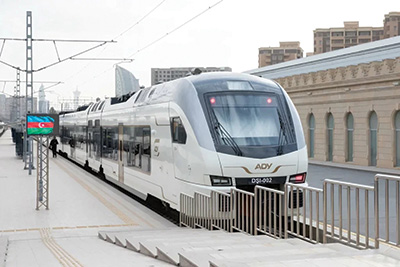
Baku-Tbilisi passenger train resumes after six years
On May 26, regular passenger rail service between Baku and Tbilisi resumed after a six-year pause. The route will be served by Stadler passenger trains purchased by Azerbaijan Railways, with Azerbaijani rolling stock and locomotives operating the full route at the initial stage.
According to Azerbaijan Railways, one hour has been allocated for border procedures at each crossing. The Baku-Tbilisi train departs Baku at 23:10 and arrives in Tbilisi the following morning at 08:41, while the Tbilisi-Baku train departs at 21:00 and arrives in Baku at 06:24. The minimum full-route ticket price is 81 manat, or approximately 127 GEL.
Exports increase 16% in April
On May 13, Geostat published preliminary foreign trade data showing that Georgia exported $716 million worth of goods in April 2026, an increase of $99.4 million, or 16%, compared to the same period last year.
Imports declined by 3%, or $44 million, to $1.48 billion in April. Overall, in the first four months of 2026, Georgia’s exports reached $2.4 billion, up 21% year-on-year, while imports decreased by 5% to $5.7 billion.
Shanghai-Tbilisi direct flights to launch in July
Direct flights between Shanghai and Tbilisi will begin on July 15, Minister of Economy and Sustainable Development Mariam Kvrivishvili announced in May. The route will be operated by China Eastern Airlines three times per week.
According to the Ministry of Economy, the launch of direct flights is expected to strengthen tourism and business ties between Georgia and China. The ministry noted that negotiations with Chinese airlines had been underway for several months as part of a broader strategy to diversify Georgia’s tourism markets and increase connectivity with Asia.
The new route follows Georgia’s intensified tourism promotion efforts in China, including the country’s participation in ITB China 2026 and broader marketing campaigns targeting Chinese travelers.
Foreign reserves rise to $6.47 billion in April
On May 7, the National Bank of Georgia reported that the country’s foreign exchange reserves increased $154 million in April compared to March, reaching $6.47 billion. According to January-March data, the NBG’s net purchases amounted to $499.7 million.
On an annual basis, Georgia’s foreign reserves increased by $2.15 billion, or 43%. The growth was mainly attributed to the central bank’s reserve purchases, amounting to $2.8 billion, as well as the increase in the price of gold, which added $343 million over the year. As of the end of April, the National Bank held seven tons of gold valued at $1.06 billion.
Baku-Tbilisi-Kars railway to officially open on June 2
The Baku-Tbilisi-Kars railway will officially open on June 2 at Akhalkalaki International Railway Station, with high-ranking officials from participating countries expected to attend a ceremony on the day. The railway is an international project jointly implemented by Georgia, Azerbaijan, and Turkey, with new infrastructure built to European standards.
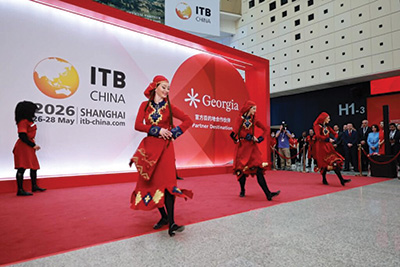
Georgia opens national stand at ITB China 2026
On May 26, Georgia opened its national stand at ITB China 2026 in Shanghai, participating in the exhibition as a partner country. The Georgian National Tourism Administration notes the country’s exhibition space covers 400 square meters and gives around 30 Georgian companies the opportunity to meet potential partners.
The three-day program includes presentations of Georgian culture, folklore, gastronomy, and wine, with support from the Ministry of Culture. Ensemble Rustavi is presenting a cultural program, while visitors can also view Georgian crafts, attend calligraphy and traditional craft masterclasses, and participate in culinary shows and wine tastings. Georgia’s participation is part of a nearly $1.5 million agreement aimed at promoting Georgian tourism in China, with $185,000 allocated specifically for ITB China.
Construction and renovation materials sector reaches ₾5.9 billion in revenue
On May 22, Galt & Taggart reported that Georgia’s construction and renovation materials sector generated 5.9 billion GEL in revenue in 2025, reflecting continued growth in construction activity and consumer demand.
According to the study, the sector expanded significantly over recent years due to increased residential construction, infrastructure development, and renovation activity. Galt & Taggart noted that demand was driven by both large-scale development projects and retail consumers undertaking home improvement and renovation works.
The report stated that imported products continue to dominate portions of the market, although local production has also increased in several categories. The study covered construction materials including cement, reinforcement materials, ceramics, paint, plumbing products, electrical materials, and finishing products.
ADB approved $1 billion in loans for Georgia in 2025
On May 22, the Asian Development Bank reported that it approved approximately $1 billion in loans for Georgia in 2025 as part of its support for infrastructure, energy, and economic development projects.
According to the bank’s annual report, the financing includes support for transport infrastructure, energy modernization, urban development, and climate-related initiatives. The ADB also continued financing projects linked to regional connectivity and logistics infrastructure.
The institution noted that Georgia remains one of the larger recipients of ADB financing in the region, with ongoing projects focused on improving transport corridors, strengthening energy systems, and supporting sustainable development goals.

National bank considers increasing gold share in reserves
On May 27, National Bank President Natia Turnava said the bank is considering increasing the share of gold in Georgia’s foreign reserves from 16.4% to 25%. Gold currently accounts for $1.06 billion of the country’s $6.47 billion in total reserves, and the proposed increase would imply additional purchases of around $500 million.
Turnava said the main rationale is diversification of foreign reserves, noting that gold is viewed as an asset that preserves value over the long term and can hedge against inflation risks. The NBG purchased seven tons of monetary gold in spring 2024 for $500 million; its current market value has since risen to $1.06 billion.
Residential real estate prices continue to rise
On May 21, Geostat reported that residential real estate prices in Georgia continued to increase in the first quarter of 2026. According to the Residential Property Price Index (RPPI), prices increased by 1.8% compared to the previous quarter and by 3% year-on-year. Compared to the 2020 average, residential property prices in Tbilisi have risen by 62.3%.
The index, which covers new residential real estate in Tbilisi, showed price growth across both apartments and detached houses. Apartment prices increased 2% quarter-on-quarter and 3.3% annually, while detached house prices rose 1.1% quarterly and 1.8% year-on-year.
Separate data from TBC Capital showed continued strength in Tbilisi’s real estate market during the first quarter. The total market size increased 24% year-on-year to $941 million, while 10,723 apartments were sold during January-March, representing a 19% annual increase. The average apartment selling price reached $1,343 per square meter, up 6% compared to the same period last year.
Banking market share shifts following Liberty and Basisbank merger
On May 25, a report published by BMG reviewed changes in Georgia’s banking market following the merger between Liberty Bank and Basisbank, a transaction that significantly reshaped the distribution of market share among the country’s leading commercial banks.
Following the merger, Liberty Bank became Georgia’s third-largest bank by assets, surpassing several mid-sized competitors and strengthening its position in both retail and corporate banking. According to the analysis, the combined institution now controls approximately 10.5% of total sector assets, while the Georgian banking market remains heavily concentrated around the two largest players, TBC Bank and Bank of Georgia.
The merger also increased Liberty’s position in deposits and loan portfolios, while expanding the bank’s customer base and regional coverage. Basisbank had previously built a strong presence in SME lending and business banking, while Liberty maintained one of the country’s largest retail networks and customer bases.