
Ancient grains, new markets: Georgia’s heritage wheat opportunity
A major opportunity is emerging for Georgia’s arable farmers: ancient heritage wheats are becoming a market of their own across the world. But whether Georgian farmers can take advantage of the moment remains to be seen.
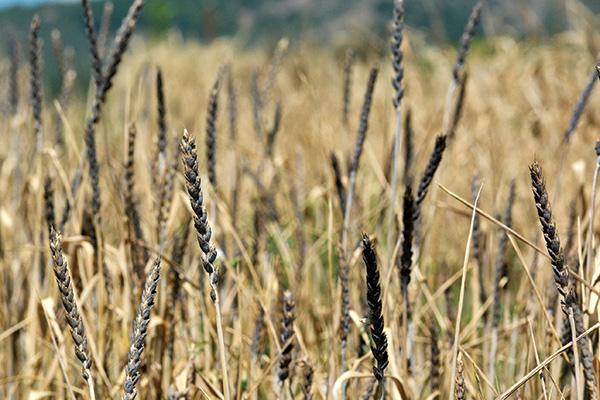
In high mountain areas across the country, smallholders have grown Georgia’s endemic ancient heritage wheat varieties—landraces—almost forgotten outside the villages. Now their characteristics are in world-wide demand for their climate and pest resilience, high but digestible nutrition, and for soil enhancement. Scientific recognition of heritage wheats’ properties has created a sizable global market—valued at over $7 billion and growing at around 10% annually, according to U.S. news platform Research Survey Trends. While still small compared to the $220 billion global wheat market, the segment is expanding rapidly.
Global demand for ancient grains
UNESCO has just helped raise the status of Georgia’s ancient landrace wheat varieties, officially recognising at last a tradition woven through more than eight millennia of history, as part of the Intangible Cultural Heritage of Humanity. As UNESCO said: “Georgia’s ancient wheat is unlike anything else in the world…Georgian wheat dates back more than 8,000 years, with archaeological and palaeobotanical discoveries placing the region among the earliest cradles of grain cultivation.”
While there are landraces to be found in most countries, the ancient wheats from Georgia are renowned for their high genetic diversity, with the country hosting 15 out of the 20 known wheat species, including five that are unique to Georgia. These endemic varieties—such as Zanduri, Macha, and Dika—have evolved over 5,000 to 8,000 years to survive in harsh mountain environments, exhibiting high immunity to fungal diseases and pests without the need for chemical fertilizer.
Placed now ideally for marketing as they come with a terrific story to tell, the question for Georgian farmers is: can they tap into heritage wheats’ new popularity? The challenge is that currently so little is grown in Georgia that finding products that could create an export market is almost impossible. It is sometimes hard enough to find the seed grains for local farmers.
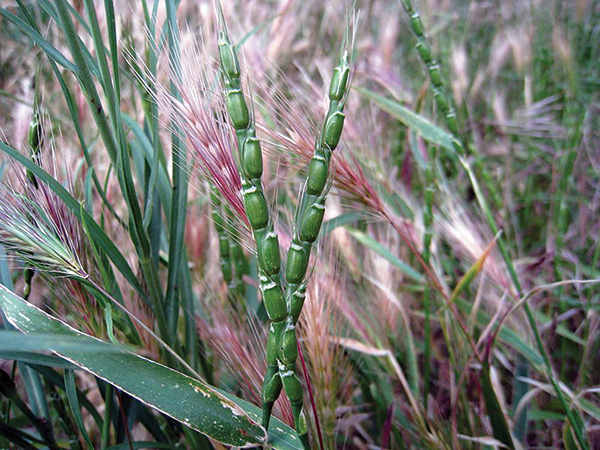
The challenge of scale
In international markets, high-volume sales of ancient grains are dominated not by wheat, but by millet, sorghum, amaranth, teff, fonio, and quinoa. Most producing countries prefer to export an added value, with finished, packaged products rather than raw grains. The tasty heritage wheats are treated as craft production, remaining largely a high-value niche for organic and health-focused consumers in bread and cereals.
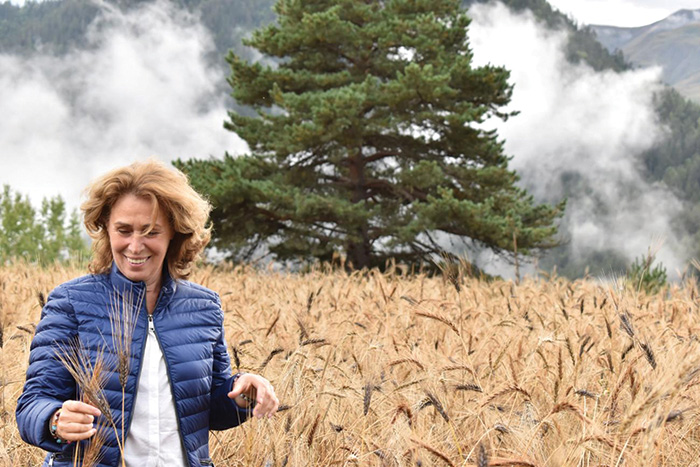
Yet, Chair and Founder of the Georgian Wheat Growers’ Association Lali Meskhi, who has championed the merits of Georgia’s landraces for over ten years, is far from despairing. A former fund manager and for many years head of the UK DFID program in Georgia (1998-2008), she has learned the hard way the whole grain-to-bread supply chain. At one stage, she owned Vake bakery Mzetamze and introduced heritage wheat artisan breads to Tbilisi. More recently, she has been navigating bureaucracies to achieve the UNESCO status and gain Georgian government backing.
The task now, she says, looking across the next ten years, is first to build up the domestic market: “We need to tell people how healthy and tasty bread from these landraces is, to increase demand, and to get grain into the bakeries to supply it. We need to increase what is available in the supermarkets as well as the niche food shops.”
The first step is not an easy one, she says: making sure farmers can get a price for their heritage grains that gives enough profit to encourage more of them to take on the risk of growing this crop. Heritage wheats, she says, are not an industrial crop, although they can technically be grown in scale. In contrast to the large-scale, heavily fertilized, monocrop systems for the modern hybrid wheats created for high yield, they are low yielding. Small Georgian farmers, the usual growers, are generally poor and have to work their small, often fragmented, plots (on average a hectare or two) hard to make a living.
Of course, the new UNESCO status will help build agritourism. Recognition of these crops also elevates the cultural value of Georgia’s “bread and wine” tradition, though far from all small farmers can get onto a heritage trail and offer hospitality. But this status also helps win attention, including from government, international organizations, and investor backing. One idea that the Georgian Wheat Growers Association is exploring (though it will need help) is to set up online markets offering certified heritage wheat flour for sale to the bakeries.
Where the value lies
Commercial attraction of heritage wheat is usually the command of significantly higher price premiums—internationally often 2x to 4x the price of standard commodity wheat—due to their specialty status and lower yields.
In Georgia, given their low yield and local economic factors, it is notable that any ancient wheat plants survive. Georgians in Samtskhe-Javakheti, Racha, and Lechkhumi, in particular, however, have always preferred them to the modern, hybrid wheats that have replaced the landrace grains since half-way through the last century. Engineered for high yields in uniform chemically-dependent, input-heavy environments (up to 40% higher than for landraces) modern wheat is short-stalked and easy to harvest by machine (landraces are tall). But their shallow roots make them vulnerable to drought and they need loads of chemical pest killers as well as nutrients.
But values and fears of the impact of climate change have reversed priorities. Ancient landrace grains, with their deep drought-and-disease resistant root system, and digestion-friendly gluten-light grains, are once again highly appreciated.
Lali Meskhi’s persistence and determination has won for Georgian wheat the UNESCO Intangible Cultural Heritage of Humanity classification. As UNESCO acknowledges, Lali has devoted years to preserving this heritage. Back in 2020, when her organization launched its first small-scale projects to rescue Georgia’s ancient grains, the UNDP and the Global Environment Facility’s (GEF’s) Small Grants Program stepped in.
“With support from UNDP and GEF, we revived endemic and landrace seeds, first in experimental nurseries and then across 50 hectares of land,” Lali says. “Farmers were trained, consulted, and encouraged. And slowly, more people joined the effort. Now there are around 100 growers.”
Laying the foundations for growth
For Lali Meskhi, ahead lies the task of not just improving the commercial prospects for Georgia’s ancient wheat growers, but also protecting Georgian wheat from biopiracy and keeping its intellectual property protected from major corporations. There is also a need for formal recognition of Georgia’s rights to share in profits from any commercial products—such as pharmaceuticals or high-yield hybrids—developed from these varieties. Registrations exist as well to protect the genetic make-up of endemic varieties.
Georgian villages once had their own endemic wheat varieties, often named after the places where they were grown—reflecting a deep link between grain and locality. This, Lali says, suggests that Georgia could formally register its traditionally grown wheats, tying them by name to specific regions, much like wine’s system of Appellations of Origin.
She is also being attentive to marketing opportunities to help raise the profile of Georgian wheat for agri-tourism. Heritage food recognition from Italy’s highly influential Slow Food Movement would be excellent, for example.
Scientific research continues at the Agriculture Scientific-Research Center of Georgia and the Agricultural University of Georgia, which maintain live gene banks and nurseries, restoring and multiplying these ancient seeds. Scientific investigations, often in partnership with the UNDP and Global Environment Facility (GEF), focus on how these grains survive harsh conditions, such as sudden frosts, extreme summer heat, and poor soils. Researchers are documenting traditional farming knowledge from elderly farmers in regions like Racha and Imereti, covering ancient techniques, soil management, and the use of native tools. Studies are analyzing the nutritional superiority and lower gluten content of endemic wheats compared to imported varieties.
One gain from this research, it is hoped, is that it might help reduce Georgia’s heavy dependence on imported wheat and Georgian farmers’ use of chemical fertilisers by reviving local, drought-resistant varieties.
Local endemic wheat bakeries
Just as important for Georgian wheat, and even more important for the farmers, is that consumer products made with heritage wheat flour are becoming increasingly available in Georgia. Artisan bakers focusing on traditional methods are often milling their own flour from heritage grains to produce sourdough and other specialty breads. Most well-known is Au Ble d’or – by Jean-Jacques, a Frenchman who came from Brittany in 2005 and has been at the forefront of the heritage wheat revival. He is himself growing Tsiteli Doli wheat in Kakheti for his bakery. Keeping totally with tradition, to preserve the flavor, he uses a stone mill to produce fresh flour for his organic breads and pastries.
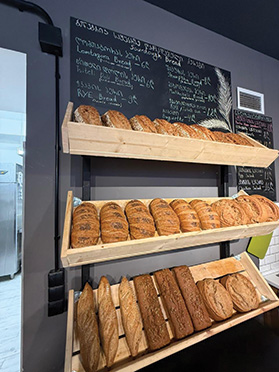
Then there is Graminea, a gastro shop at 11 Giga Lortkipanidze Street in Sololaki, offering artisanal products, including bread made from local wheat varieties, as well as chia and buckwheat options. Lagazi Bakery near the 300 Aragveli metro station, is a Tush family-owned bakery which uses native flour for sandwiches and “Pizza Thursdays”. Natella’s Bread situated in the Didube/Tsereteli area is noted for its wide range of breads made from endemic Georgian grains, specifically Tsiteli Doli and Dika flour. The Agrohub supermarket chain is known for carrying heritage wheat products, including wholewheat Tsiteli Doli and various stone-ground flours.
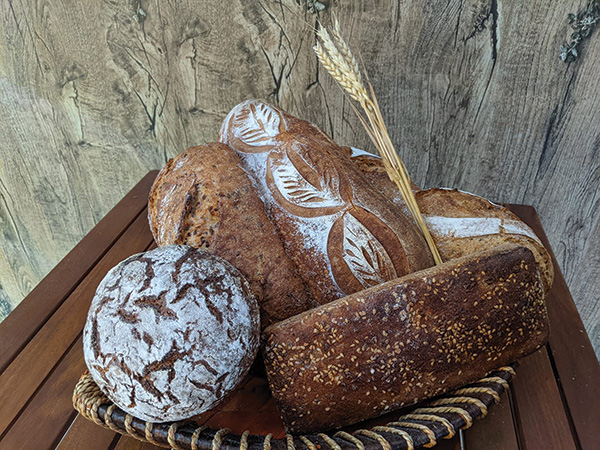
This retail base has to expand substantially, however, if Georgia’s heritage grains are to take root at home before any push into international markets. Lali Meskhi is clear about what is required: “A comprehensive safeguarding and marketing plan is needed. This plan should promote a sustainable approach and provide long-term support for the entire heritage wheat production chain, backed by scientific research. It should also include appropriate regulations for quality control and measures to develop the domestic market.”
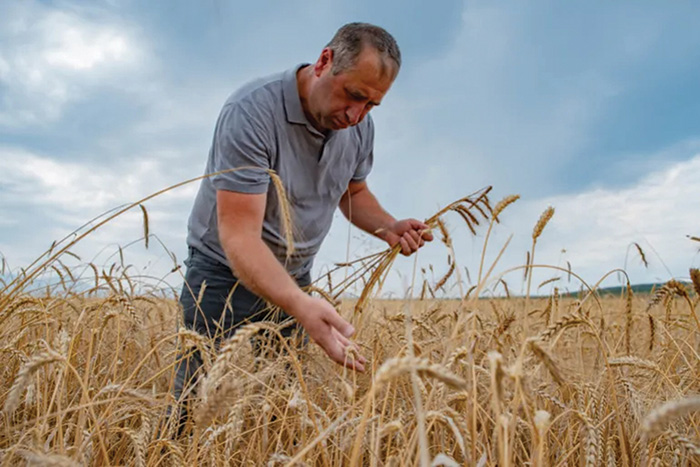
She adds that all main stakeholders—producers, government institutions, experts and the wheat growers’ association—must participate both in shaping the strategy and in implementing it. Without that coordinated effort, the opportunity risks remaining exactly that: an opportunity, rather than an outcome.