
From manuscripts to machine learning — can AI speak Georgian?
For centuries, Georgians fought to preserve their language. Today, they are teaching it to machines. As AI, software developers, and policymakers turn their attention to Georgian, the battle for linguistic survival has entered the digital era.
Increasingly, not just in Georgia but around the world, governments are responding to globalization by asserting national identities, often placing the promotion of native languages at the forefront. In some countries, such as Italy and France, this has involved strong legislative measures. France, for example, can fine officials up to €100,000 for using English in formal communications.
China is enforcing a uniform national language by systematically marginalizing minority tongues, while India operates a decentralized, multilingual federal framework that prioritizes mother tongues but continues to grapple with tensions surrounding the imposition of central languages. Such efforts are variously described as attempts to build cultural confidence or shed a colonial mindset. Georgia’s approach is broad and far-reaching, and official initiatives are increasingly being supported online.
Vital in a technology-dominated society, Georgia’s efforts to preserve its national identity are being assisted by the World Wide Web Consortium (W3C)—the primary international standards organization for the web—which is helping ensure that Georgia’s unique script functions properly across the internet and that its language is accurately represented online. It is not the sort of story that makes headlines, but it is essential for protecting Georgia’s place in 21st-century connectivity.
The contrast with Kazakhstan is instructive. Kazakh-speaking users of artificial intelligence have found that they often receive less complete, less accurate, and less natural responses than Russian-language users.
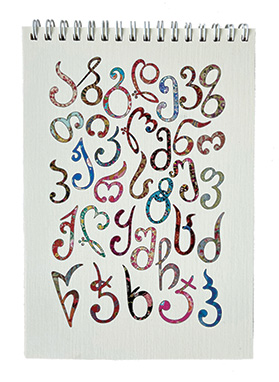
The W3C is also actively working to integrate Georgian into global digital infrastructure, primarily by closing technological gaps in localization, artificial intelligence, and machine learning. In today’s world, perhaps more important than UNESCO recognition of the Georgian script is the fact that major developers such as Apple continue to expand support for Georgian, including the SF Georgian extension, which accommodates both contemporary and historic (Mtavruli) text display.
Because Georgian is a unique language with its own distinct alphabet and complex grammar, technology companies and open-source initiatives face specific challenges. Indeed, Georgia’s alphabet has famously demonstrated a capacity to confound Silicon Valley algorithms.
Since Georgian has a relatively limited volume of natural-language training data compared to major global languages, AI models have historically struggled with the Mkhedruli alphabet and complex grammatical features like the ergative case. Technology organizations are now actively training models using highly localized datasets—including legal, conversational, and marketing content—to reach commercial viability thresholds. Local platforms such as aiNOW are actively stress-testing and cataloging AI systems that genuinely understand Georgian phonetics, text-to-speech functions, and language structure.
Through initiatives such as the Georgian Script Resources project and ongoing gap analyses, the W3C is helping ensure that Georgian text is treated as a first-class citizen online. Browsers, text-to-speech tools, and operating systems can increasingly render the alphabet without distortions or coding errors. Standardizing the language internationally allows Georgian speakers to access global platforms, online education, and e-commerce in their native language, reducing the risk of digital exclusion. Unicode and CLDR initiatives also continue to expand support for Georgian across operating systems and software.
Global tech entities and foundations are likewise working to address Georgian’s underrepresentation in voice and speech technologies. Smart assistants such as Siri and Alexa, as well as text-to-speech systems, require vast amounts of spoken audio data to function effectively—something the Georgian internet has historically lacked. Google Translate help pages have actively sought contributions from Georgian speakers, while open-source projects such as Mozilla Common Voice crowdsource recordings from native speakers. These efforts help developers build public-domain datasets capable of training AI systems to understand and speak Georgian more naturally.
Homeland, language, and faith
There is every reason for small countries to fear language erosion, particularly Georgia, where “homeland, language, and faith” have served as the three pillars of national identity since the fourth century.
The phrase Mamuli, Ena, Sartsmunoeba (“Homeland, Language, Faith”) was coined in 1860 by Prince Ilia Chavchavadze, Georgia’s foremost 19th-century intellectual, writer, and publicist. He sought to establish a modern framework for Georgian national identity, unite a fragmented society, and protect Georgian culture under the Russian Empire. Chavchavadze placed ena (language) at the center of the triad because he believed that a nation loses its soul and identity the moment it loses its native tongue.
Georgian reflects the many cultural and political influences that have touched the country throughout its history. According to scholars, the language shares some basic Indo-European vocabulary and contains limited Greek, Iranian, and Russian influences, along with an increasing influx of English terms—reflecting international tourism, education, and the influence of the internet.
Yet Professor Donald Rayfield, the University of London scholar who compiled the acclaimed Georgian-English dictionary, offers reassurance. “The history of Georgian shows half a dozen periods when there has been a massive onslaught or infusion of alien terms, of which only a minority have established themselves in the language.”
Rayfield adds that Georgian, which he describes as an “orphan language” because its origins remain uncertain and which is among the world’s oldest written languages, has little reason to fear linguistic change. Like “English or Russian, it borrows easily and widely, and yet preserves its identity while quickly rejecting what it fails to assimilate.”
Language policy and the modern state
The Georgian government has placed increasing emphasis on the use of the Georgian language in everyday life for a combination of cultural, political, demographic, and practical reasons. The policy is not framed as anti-English but rather as an effort to strengthen the national language after decades of outside influence.

Georgia also maintains enforcement mechanisms. Current regulations allow fines of up to 1,000 GEL for individuals and 5,000 GEL for legal entities, with additional daily penalties possible for ongoing noncompliance. In practice, enforcement has historically been uneven and relatively mild, with most action focused on administrative issues. A tougher approach could emerge in the future.
Recent measures have largely taken the form of amendments and policy implementation under Georgia’s Organic Law on the State Language. Among the most significant developments has been this year’s education reform, which explicitly states that Georgian-language instruction should reinforce “cultural thinking and civic consciousness.” The reform calls for curriculum revisions, textbook standardization, and an expansion of state-produced educational materials.

The government has also made a foundational Georgian-language course compulsory for all undergraduate students, reversing a decades-old policy that had phased out mandatory university-level language instruction. Universities are now required to include Georgian-language courses in many degree programs.
One of the most significant changes has been the introduction of Georgia’s first standardized state-language exam.
According to the Ministry of Education, the exam is intended to strengthen the status of Georgian and certify language proficiency for foreigners, diaspora Georgians, public-sector employees, and non-native speakers working in Georgia.
The government is also actively funding Georgian-language instruction abroad. However, the shift is often less about “Georgian versus English” and more about protecting Georgian while remaining open to the world. English continues to be strongly promoted as the dominant language of international business and the internet, a common language for tourists, and an important tool for closer integration with Europe and the West.
English is widely taught in schools, and younger Georgians often learn it enthusiastically, seeing it as a pathway to international opportunities. Even many critics of the government support strong protection of the Georgian language itself; disagreements generally center on implementation, accommodation of minority communities, and concerns about politicization.
Language, integration, and national cohesion
The push for greater use of Georgian in education and public administration is driven by more than concern over what Professor Rayfield has called “the indigestible impact of English on the modern Georgian lexicon.”
Language is also viewed as a tool for civic integration. The political and cultural significance of Georgian was permanently etched into public memory on April 14, 1978—now celebrated as Georgian Language Day—when mass protests successfully preserved Georgian’s status as an official state language after Soviet authorities attempted to downgrade it.
Today, another major driver of language policy is the integration of Georgia’s ethnic minority populations, who account for roughly 16% of the country’s population and are primarily concentrated in regions like Samtskhe-Javakheti and Kvemo Kartli. Officials argue that stronger Georgian-language proficiency can help remove barriers to higher education, employment, and public-sector careers, reducing social inequality and marginalization.
The National Concept for Education stipulates that language instruction should not only develop linguistic skills but also reinforce cultural thinking and civic consciousness among Georgian citizens. The Constitution of Georgia and the Law on the State Language require official documents, municipal services, and legislative texts to be processed in Georgian as a matter of state sovereignty.
Ruling-party officials have framed reinforcement of the Georgian language and education system as a means of protecting society from external ideological influences and foreign manipulation. By promoting state-approved curricula and an education system rooted in Georgian cultural traditions, policymakers aim to foster a population with a strong sense of national identity—even as an increasingly technology-savvy society spends much of its time online in English.
The mystery and beauty of Georgia’s scripts
Almost as mysterious as the origins of the Georgian language itself are the origins of Georgia’s distinctive scripts.
According to medieval Georgian chronicles, particularly Kartlis Tskhovreba (“Life of Kartli”), the alphabet was created by Pharnavaz I of Iberia in the third century BCE. Most modern scholars, however, consider this account legendary due to the absence of archaeological evidence. Instead, they believe the Georgian alphabet likely emerged around the time Georgia adopted Christianity under King Mirian III in the fourth century CE.
The earliest confirmed Georgian inscriptions date to the fifth century, including the Bir el Qutt inscriptions near Jerusalem (c. 430 CE) and the Bolnisi inscriptions (c. 494 CE). Scholars generally believe the script was developed to translate Christian religious texts into Georgian.
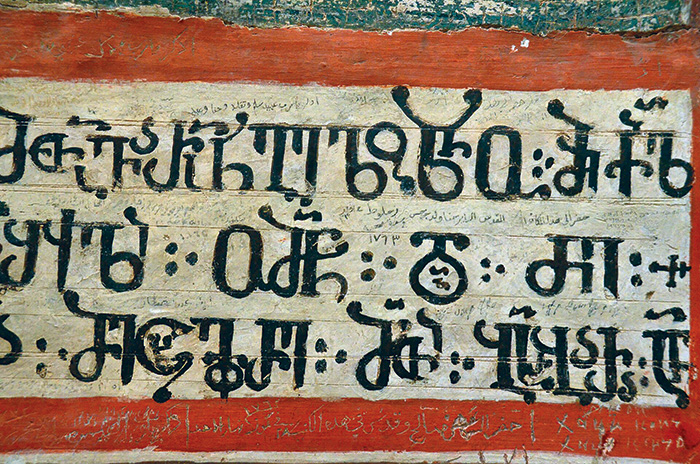
Unlike many cultures that abandoned earlier writing systems entirely, Georgia preserved its older scripts through the influence of the church, the cultural importance of manuscripts, and the integration of writing into religious identity. Asomtavruli survived in ceremonial use, Nuskhuri remained a liturgical script, and Mkhedruli evolved into the script used in everyday life.

The continued coexistence of these three writing systems contributed to their recognition by UNESCO as Intangible Cultural Heritage of Humanity. Asomtavruli and Nuskhuri remain actively used by the Georgian Orthodox Church in religious manuscripts, icons, and hymns.
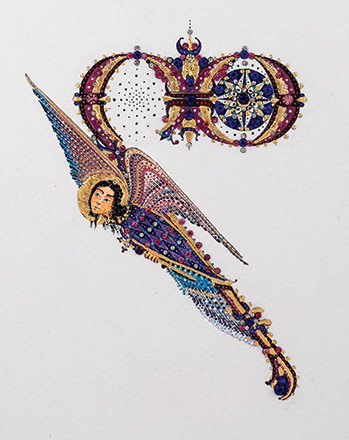
These scripts also continue to inspire contemporary artists and designers. Beyond internationally recognized figures such as Ukrainians Oleksiy Chekal and Roman Savchenko, artists including Ken Boyer in the United States and Peter Bil’ak in the Netherlands have explored Georgian typography in their work.
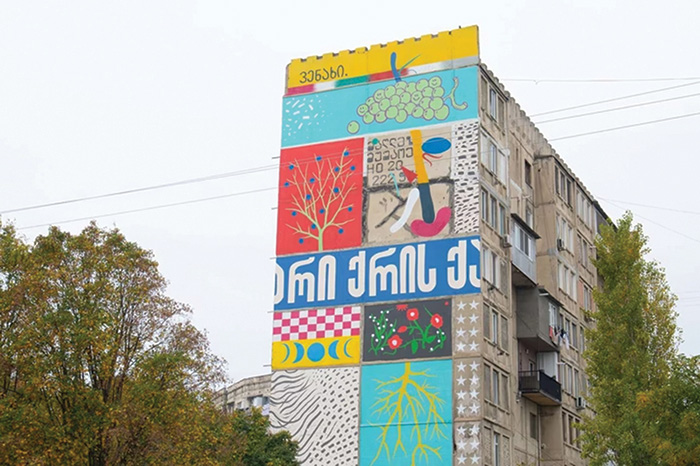
Georgian artists working with the script include Shota Saganelidze, Giorgi Sisauri, Beka Beridze—known for his digital typography and “word as image” projects—Ana Sanikidze, Mishiko Sulakauri (LAMB), the Tsru street-art collective, and prominent street artist Tamoonz (Tamuna Tsakhnakia).
Georgian script has also left its mark on international literature. The renowned English philologist and author of The Hobbit and The Lord of the Rings, J. R. R. Tolkien is known to have studied the aesthetics of the Georgian script. Literary scholars and enthusiasts have long noted similarities between the flowing forms of the Mkhedruli alphabet and Tolkien’s invented Tengwar script, used by the Elves in his fictional world.